
Industry News & Analysis · COMMERCIAL / PROS
FireFly Robotics Files for Nasdaq Direct Listing, Reports More Than 900 Machines in Service
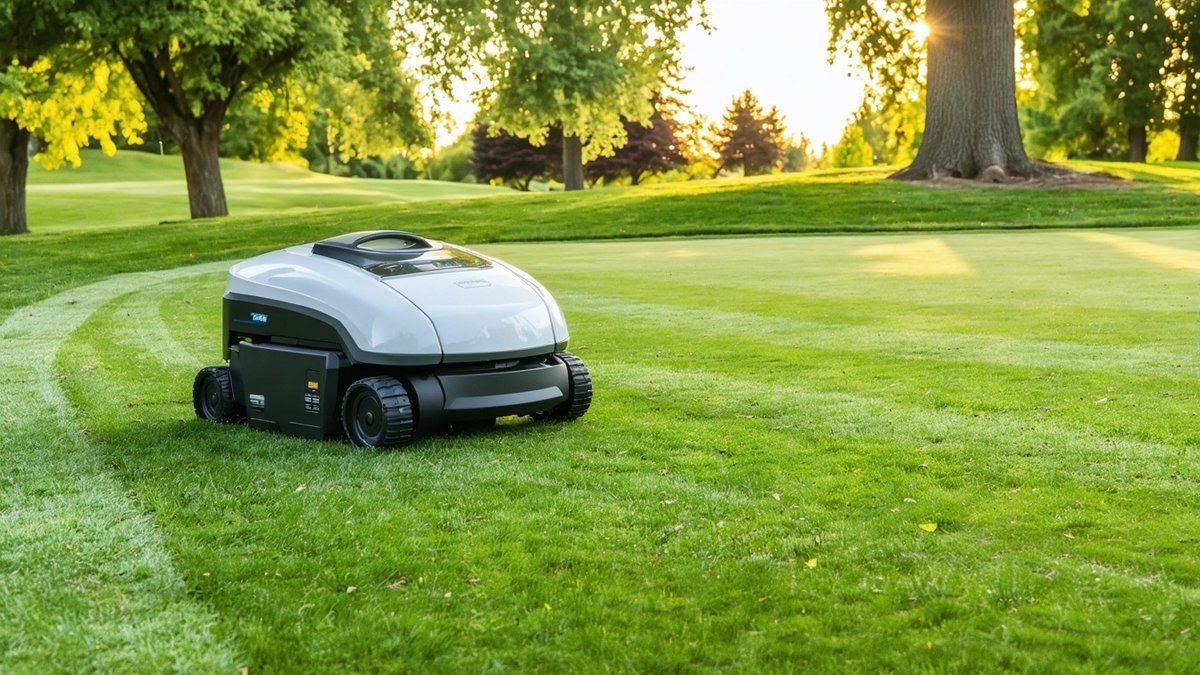
FireFly Robotics, the Salt Lake City maker of autonomous golf-course mowers and electric turfgrass harvesters, has filed with the U.S. Securities and Exchange Commission for a direct listing of its common stock on the Nasdaq Global Market under the symbol FFLY. The company announced the filing on October 7, 2026. The Form S-1 prospectus on sec.gov discloses fleet and financial figures that are rarely published for commercial autonomous turf equipment.
A Direct Listing, Not an IPO
In a direct listing the company sells no shares and raises no money; existing holders are registered to sell theirs. FireFly says it "is not selling any shares and will not receive any proceeds". The prospectus registers the resale of up to 27,134,738 shares by existing stockholders. The listing is expected after the SEC completes its review, and no date or reference price has been set. Chardan is acting as financial advisor.
Reuters reported that the company had filed for a conventional IPO in October 2025, seeking up to $29.3 million by selling 4.5 million shares at $4.50 to $6.50 each, and withdrew that filing in March 2026. The company changed its name from FireFly Automatix to FireFly Robotics on June 11, 2026.
The Fleet
FireFly says it had an estimated combined total of more than 900 machines in service worldwide as of June 30, 2026, up from 76 machines at the end of 2016, a compound annual growth rate of about 29.9%. The count mixes three product lines: the Autonomous Mowing Platform (AMP), the Manned Robotic Harvester (MRH) used by turf farms, and the M220 automated mower sold from 2019 through 2023. The prospectus does not break the 900 down by line.
The AMP-L100, a reel mower for short heights of cut, was introduced in 2023 and sold from 2024. The AMP-X100, a rotary mower for longer grass, was introduced and sold in 2025. FireFly lists AMP-X60 and AMP-X90 platforms, a greens roller, a bunker rake and a fairway sprayer as products under development. It describes its customers as golf courses, sports fields, turf farms and related public and private sites, with harvesters operating in the United States, Australia, the United Kingdom, Brazil, Canada, South Africa, Israel and Mexico.
The Numbers
For the six months ended June 30, 2026, revenue was $30.5 million, up 33.1% from $22.9 million a year earlier. Gross profit rose to $7.1 million from $3.8 million, and the loss from operations narrowed to $2.7 million from $4.6 million. The net loss nevertheless widened to $9.1 million from $6.1 million, because of non-cash charges of $3.6 million for the change in fair value of convertible debentures and $2.6 million for the warrant liability.
The robot mower line is the growth engine. AMP revenue was $8.7 million in the first half of 2026 against $3.5 million a year earlier, while harvester (MRH) revenue was $12.7 million against $12.0 million. By ship-to geography, the United States accounted for $25.5 million, Australia $2.5 million and Europe $1.1 million.
For the full year 2025, revenue was $47.2 million and the net loss about $15.1 million. The accumulated deficit stood at $100.6 million at June 30, 2026. FireFly began operations in 2010, employed 213 full-time staff at June 30, 2026 and builds its machines in a 108,500 square foot facility in Salt Lake City, Utah.
Update: AMP Fleet Passes 150,000 Acres Mowed
Added October 16, 2026. In an article dated September 30, FireFly said its AMP-L100 fleet has now mowed more than 150,000 acres autonomously, twice the figure it reported in May and reached in about five months. The company equates that to more than 80,000 fairways (its highlight box says 83,000-plus, on an average fairway of 1.8 acres) or 6.5 billion square feet of turf. FireFly says AMP-L100 units run at golf courses in 33 U.S. states, plus Puerto Rico, Mexico and Canada, and gives an average productivity of 4.8 acres per hour at a maximum mowing speed of 6 mph, an average that includes turns but not overlap.
Two things to keep apart. The 150,000 figure is cumulative mowing by the AMP-L100 reel mowers alone, not land area and not the whole company: the more than 900 machines in service at June 30 (see above) also count harvesters and the older M220. And the figures are FireFly's own; the article names no unit count and no course count, and nothing in it is independently audited. FireFly credits the growth to its QuickPlan course mapping, the Autonomous PathLink feature that moves a mower between fairways on its own, SmartStart, and over-the-air updates.
Why It Matters
Most commercial autonomous mower makers are private and publish no numbers. FireFly's prospectus puts hard figures on one of them: a fleet of more than 900 machines, robot mower revenue that more than doubled year on year, and losses that are still growing. That is a useful benchmark for anyone judging claims elsewhere in the commercial market. AI Mower News keeps a profile of FireFly under its former name, FireFly Automatix.
FAQ
Is FireFly Robotics publicly traded?
Not yet. It has filed a Form S-1 for a direct listing on Nasdaq under FFLY. The listing can only happen after the SEC completes its review.
How many FireFly machines are in use?
The company says more than 900 AMP, MRH and M220 machines combined were in service worldwide as of June 30, 2026.
Is FireFly profitable?
No. It reported a net loss of $9.1 million for the first half of 2026 and about $15.1 million for 2025.
Sources: fireflyautomatix.com/amp-fleet-150000-acres-mowed-autonomously/ · globenewswire.com/news-release/2026/10/07/3376769/0/en/firefly-robotics-announces-filin · sec.gov/Archives/edgar/data/0001660851/000149315226046104/forms-1.htm · reuters.com/business/firefly-robotics-files-nasdaq-direct-listing-2026-10-07/