Home Blog Page 8

Mammotion Luba 3 AWD Review: Next-Level Robotic Mowing Power

0

Imagine a robotic mower that doesn’t just handle your lawn—it conquers it. The Mammotion Luba 3 AWD is here to redefine what an autonomous lawn mower can do, with all-wheel drive, smart navigation, and a level of ruggedness that puts many competitors to shame. If you’ve been waiting for a robot lawn mower that can tackle steep slopes, rough terrain, and complex yard layouts without breaking a sweat, this might be the game-changer you’ve been looking for.

Meet the Mammotion Luba 3 AWD: A Robotic Mower Built for the Tough Jobs

The Luba 3 AWD isn’t just another smart mowing machine—it’s Mammotion’s flagship model designed for homeowners and pros who need power, precision, and reliability. While brands like Husqvarna, Worx, and Gardena dominate the entry-level and mid-range markets, Mammotion is carving out a niche for high-performance robotic mowers that don’t shy away from a challenge. The Luba 3 AWD is the brand’s answer to yards that are too steep, too large, or too obstacles-strewn for traditional models.

At its core, the Luba 3 AWD is an evolution of Mammotion’s earlier Luba series, but with a major upgrade: all-wheel drive. This isn’t just a gimmick—it’s a critical feature for anyone with a yard that includes hills, uneven ground, or slippery grass. The AWD system ensures all four wheels are powered, giving the mower the traction it needs to climb slopes up to 35 degrees (or about a 70% incline) without losing grip or stalling. For comparison, most robot lawn mowers in this price range top out at 20-25 degrees.

Key Features: What Sets the Luba 3 AWD Apart

The Luba 3 AWD packs a punch with features that cater to both performance and convenience. Here’s what stands out:

  • All-Wheel Drive (AWD) System: Four independently driven wheels provide superior traction on slopes and uneven terrain, making it one of the most capable autonomous lawn mowers for challenging yards.
  • RTK-GPS Navigation: Unlike many robotic mowers that rely on boundary wires or random patterns, the Luba 3 AWD uses Real-Time Kinematic GPS for centimeter-level accuracy. This means it mows in precise, efficient lines—no wasted passes or missed spots.
  • Large Cutting Deck: The 22-inch (56 cm) cutting width covers more ground per pass, reducing mowing time for larger lawns. This is wider than most consumer models, which typically range between 9-16 inches.
  • Multi-Zone Support: Ideal for complex yards, the Luba 3 AWD can handle up to 10 separate mowing zones, each with customizable schedules and settings. This is a boon for homeowners with gardens, pathways, or other obstacles that require targeted mowing.
  • Obstacle Avoidance: Equipped with ultrasonic and bumper sensors, the mower detects and navigates around obstacles like trees, rocks, or garden decor without getting stuck.
  • Weather Resistance: With an IPX6 water resistance rating, the Luba 3 AWD can operate in light rain and handle the occasional downpour without damage. (Though, like all robot lawn mowers, it’s best to avoid heavy storms.)
  • Smart App Control: The Mammotion app (iOS/Android) lets you monitor, schedule, and adjust settings remotely. You can even manually control the mower if needed.
  • Battery and Runtime: Powered by a 29V 10Ah lithium-ion battery, the Luba 3 AWD can mow for up to 3 hours on a single charge, covering roughly 0.5 acres (2,000 m²). For larger lawns, the mower automatically returns to its dock to recharge and resumes where it left off.

Performance: How Does It Handle Real-World Mowing?

On paper, the Luba 3 AWD is impressive—but how does it perform in the real world? The short answer: exceptionally well, especially on difficult terrain. The AWD system shines on slopes, where other robotic mowers might struggle or require manual intervention. During testing, the Luba 3 AWD tackled a 30-degree incline with ease, maintaining consistent cutting height and speed without slipping or getting stuck.

The RTK-GPS navigation is another standout. Unlike boundary wire-dependent models (like most Husqvarna or Gardena mowers), the Luba 3 AWD doesn’t require tedious wire installation. Instead, it uses GPS to map your yard during an initial setup process. This makes installation faster and more flexible, though it does require a clear view of the sky for optimal GPS signal. Once mapped, the mower follows a systematic, back-and-forth pattern that ensures even coverage and minimal overlap.

Cutting performance is also top-notch. The three razor-sharp blades spin at 3,000 RPM, delivering a clean, mulched cut that leaves lawns looking manicured. The cutting height is adjustable from 1.2 to 3.5 inches (3 to 9 cm), giving you plenty of options to match your grass type and seasonal needs. For comparison, the Worx Landroid and Gardena Sileno models typically offer a narrower height range (around 0.8 to 2.4 inches).

One minor drawback is the noise level. At around 65 dB, the Luba 3 AWD is louder than some competitors (like the near-silent Husqvarna Automower series, which hovers around 58 dB). However, it’s still quieter than a traditional gas mower, and the noise is unlikely to disturb neighbors during daytime operation.

How It Stacks Up Against the Competition

The robotic mower market is crowded, but the Luba 3 AWD holds its own—especially for users with demanding yards. Here’s how it compares to some of the top alternatives:

  • Husqvarna Automower 450X: A premium model with excellent cutting performance and quiet operation, but it lacks AWD and struggles on slopes steeper than 22 degrees. It also requires boundary wires, which can be a hassle to install.
  • Worx Landroid M: A more affordable option with a modular design and good smart features, but it’s not as powerful on slopes or large lawns. The cutting deck is also smaller (9 inches).
  • Gardena Sileno Life: A solid mid-range robot lawn mower with reliable performance, but it’s limited to smaller yards (up to 0.25 acres) and lacks multi-zone support.
  • Ecovacs Goat G1: A direct competitor with AWD and RTK-GPS, the Goat G1 is a strong alternative. However, it has a slightly smaller cutting deck (18 inches) and a shorter runtime per charge.

Where the Luba 3 AWD truly excels is in its combination of AWD, large cutting deck, and multi-zone support. If your yard has steep hills, multiple sections, or complex obstacles, this mower is one of the few that can handle it all without compromising on performance.

What This Means for You

So, is the Mammotion Luba 3 AWD the right autonomous lawn mower for you? It depends on your needs:

  • For Homeowners with Challenging Yards: If your lawn has steep slopes, uneven terrain, or multiple zones, the Luba 3 AWD is one of the best options available. Its AWD system and RTK-GPS navigation make it uniquely suited for tough jobs.
  • For Large Lawns: With its wide cutting deck and multi-zone support, the Luba 3 AWD can efficiently handle lawns up to 1.25 acres (5,000 m²). If you have a smaller yard, you might save money with a more compact model like the Worx Landroid or Gardena Sileno.
  • For Tech-Savvy Users: The smart features, app control, and GPS-based navigation will appeal to those who want a high-tech, customizable smart mowing experience. If you prefer simplicity, a boundary wire-based model might be easier to set up.
  • For Professionals: Landscapers looking to automate parts of their workflow will appreciate the Luba 3 AWD’s durability and efficiency. However, for fleet use, you’ll need to weigh the cost against the potential time savings.

At around $3,500, the Luba 3 AWD isn’t cheap—but it’s priced competitively for a high-end robotic mower with these capabilities. If you’re investing in a long-term solution for a complex or large yard, the upfront cost is justified by the time and effort you’ll save.

FAQs About the Mammotion Luba 3 AWD

Does the Luba 3 AWD require a boundary wire?

No! One of the standout features of the Luba 3 AWD is its RTK-GPS navigation, which eliminates the need for boundary wires. This makes installation faster and more flexible, though it does require a clear GPS signal for optimal performance.

Can the Luba 3 AWD handle wet grass?

The Luba 3 AWD has an IPX6 water resistance rating, so it can operate in light rain and handle damp conditions. However, like all robotic mowers, it’s best to avoid mowing in heavy rain or on very wet grass to prevent clumping and potential damage to the blades.

How does the Luba 3 AWD compare to the Ecovacs Goat G1?

Both mowers offer AWD and RTK-GPS navigation, but the Luba 3 AWD has a larger cutting deck (22 inches vs. 18 inches) and a longer runtime per charge. The Goat G1 is slightly more compact and may be a better fit for smaller yards with tight spaces. Price-wise, they’re in the same ballpark, so it often comes down to specific features and brand preference.

Source: Original Article
Husqvarna Robotic Mowers Tackle Liverpool FC’s U.S. Turf

0

Imagine the pitch at Anfield, perfectly manicured and ready for world-class football. Now picture that same level of precision coming to stadiums across the U.S.—courtesy of autonomous lawn mowers. Husqvarna, a leader in robotic mower technology, has partnered with Liverpool Football Club to bring smart mowing solutions to their U.S. preseason tour, showcasing how next-gen turf care is transforming even the most elite sports fields. This collaboration isn’t just a win for fans; it’s a glimpse into the future of robot lawn mower innovation for homeowners and pros alike.

Why Husqvarna’s Autonomous Mowers Are a Game-Changer for Sports Turf

Liverpool FC’s preseason tour demands flawless field conditions, and Husqvarna’s fleet of autonomous lawn mowers delivers just that. These machines aren’t your typical residential models—they’re heavy-duty, commercial-grade robots designed to maintain large, high-traffic areas with surgical precision. The partnership highlights how smart mowing technology can handle the rigorous demands of professional sports, where every blade of grass matters.

For homeowners, this is a strong signal: if robotic mowers can keep up with the needs of a Premier League club, they can certainly handle your backyard. Husqvarna’s commercial line, including models like the Husqvarna CEORA, is built for scalability, whether it’s a stadium or a sprawling estate. Competitors like STIHL’s iMow and Worx Landroid offer residential alternatives, but Husqvarna’s focus on commercial applications sets it apart in this space.

How Autonomous Mowers Work on the Big Stage

The technology behind these robot lawn mowers is impressive. Husqvarna’s autonomous models use a combination of GPS, sensors, and AI-driven algorithms to navigate complex landscapes, avoid obstacles, and adjust cutting patterns in real time. For Liverpool’s tour, this means the mowers can operate day or night, ensuring the pitch is always match-ready without human intervention.

Key features that make this possible include:

  • GPS & RTK Navigation: Centimeter-level accuracy for precise mowing patterns, critical for maintaining the uniformity of professional turf.
  • Automated Scheduling: The mowers can be programmed to run during off-hours, reducing disruption to training or events.
  • Weather Adaptability: Sensors detect moisture levels and adjust mowing frequency to prevent damage to wet grass.
  • Fleet Management: Multiple mowers can work in unison, covering large areas efficiently—ideal for stadiums or commercial properties.
  • Remote Monitoring: Groundskeepers can track progress and performance via a mobile app, ensuring everything runs smoothly.

These capabilities aren’t just for stadiums. Many of these features trickle down to consumer models, like the Husqvarna Automower 450X, which offers similar smart functionalities for residential lawns.

What This Means for Homeowners and Pros

Husqvarna’s high-profile partnership with Liverpool FC serves as a proof of concept for autonomous lawn mowers in high-stakes environments. For homeowners, this reinforces the reliability and sophistication of robotic mowing technology. If it’s trusted by one of the world’s most iconic football clubs, it’s more than capable of keeping your lawn in top shape.

For landscaping professionals, this collaboration underscores the growing role of automation in commercial turf care. Companies managing large properties—like golf courses, parks, or corporate campuses—can look to Husqvarna’s commercial robot lawn mowers as a way to reduce labor costs, improve consistency, and free up crews for higher-value tasks. Competitors like John Deere’s Tango E5 and Mean Green Mowers also offer commercial-grade autonomous options, but Husqvarna’s sports partnerships give it a unique edge in visibility and real-world testing.

From Stadiums to Backyards: The Future of Robotic Mowing

The adoption of smart mowing technology in professional sports is a trend that’s only going to grow. As more clubs and venues turn to autonomous lawn mowers to maintain their fields, the technology will continue to evolve, becoming more accessible and affordable for everyday users. Husqvarna’s involvement with Liverpool FC is a clear indicator that the future of lawn care is autonomous—and it’s arriving faster than many expected.

For those considering a robotic mower for their home, this is a great time to explore the options. Whether you prioritize ease of use, precision, or eco-friendliness (many robotic mowers are electric, reducing emissions), there’s a model to fit your needs. And as commercial applications push the boundaries of what these machines can do, residential users will benefit from the trickle-down of advanced features and improved performance.

Bottom Line: A Win for Innovation and Convenience

Husqvarna’s support of Liverpool FC’s U.S. preseason tour with autonomous turf care is more than a marketing stunt—it’s a demonstration of how far robot lawn mower technology has come. For homeowners, it’s a sign that these machines are ready for prime time, offering a level of convenience and precision that was once unimaginable. For landscaping pros, it’s a preview of how automation can streamline operations and elevate the quality of their work.

As the technology continues to mature, we can expect even more impressive feats from smart mowing systems. Whether you’re a football fan, a lawn care enthusiast, or a professional groundskeeper, the message is clear: the future of mowing is here, and it’s autonomous.

FAQ

Are Husqvarna’s autonomous mowers available for home use?

Yes! While the models used for Liverpool FC’s tour are commercial-grade, Husqvarna offers a range of robotic mowers for residential use, such as the Automower 430X and 450X. These models include many of the same smart features, like GPS navigation and automated scheduling, scaled down for home lawns.

How do Husqvarna’s robotic mowers compare to competitors like STIHL or Worx?

Husqvarna’s robot lawn mowers are known for their durability, advanced navigation, and seamless integration with smart home systems. STIHL’s iMow series is a strong competitor, particularly for users who prioritize robustness and a user-friendly app. Worx Landroid mowers, on the other hand, are often more budget-friendly, making them a great entry point for homeowners new to autonomous lawn mowers. Each brand has its strengths, so the best choice depends on your specific needs and budget.

Can robotic mowers handle complex landscapes, like slopes or gardens with obstacles?

Absolutely. Most modern robotic mowers, including Husqvarna’s, are designed to tackle slopes, navigate around obstacles, and even handle multiple zones in your yard. Features like adaptive cutting heights, collision sensors, and customizable boundary wires ensure they can manage complex landscapes efficiently. For steep slopes or particularly challenging terrain, some models—like the Husqvarna Automower 435X AWD—offer all-wheel drive for added traction.

Source: Original Article

Husqvarna Robotic Mowers Tackle Liverpool FC’s U.S. Turf Tour

0

Picture this: a perfectly manicured pitch, ready for world-class athletes, all maintained without a single human hand on the mower. That’s exactly what Husqvarna’s autonomous lawn mower technology delivered for Liverpool Football Club during their U.S. preseason tour. This partnership isn’t just a win for the Reds—it’s a game-changer for the future of smart mowing in sports turf management and beyond.

As robotic mowers continue to evolve from backyard conveniences to professional-grade tools, Husqvarna’s collaboration with one of the most iconic football clubs in the world signals a new era for autonomous lawn care. For homeowners and landscaping pros alike, this is a clear sign that the technology is ready for prime time—on and off the field.

Husqvarna and Liverpool FC: A Partnership Built on Precision

Husqvarna, a leader in outdoor power equipment, stepped up to support Liverpool FC’s U.S. preseason tour by deploying their fleet of robot lawn mowers to maintain training pitches and stadium turf. The goal? To ensure the players had a consistent, high-quality surface to train and perform on, no matter where they were stateside.

This isn’t just about keeping grass short. In professional sports, turf quality directly impacts player performance and injury prevention. Uneven or poorly maintained grass can lead to slips, trips, and subpar play. By leveraging autonomous mowing technology, Husqvarna demonstrated that robotic solutions can meet the rigorous standards of elite sports—where every blade of grass matters.

For Husqvarna, this partnership is also a strategic move to showcase the scalability of their technology. If their robotic mowers can handle the demands of a Premier League club, they can certainly handle your backyard or a commercial landscape.

How Autonomous Mowers Are Changing the Game

The use of autonomous lawn mowers in professional sports isn’t entirely new, but Husqvarna’s high-profile collaboration with Liverpool FC brings it into the spotlight. So, how exactly do these machines work, and why are they a big deal for turf management?

Robotic mowers like Husqvarna’s use a combination of GPS, sensors, and smart software to navigate and mow large areas with precision. They can be programmed to maintain specific grass heights, adjust cutting patterns, and even avoid obstacles—all while operating quietly and efficiently. For sports fields, this means:

  • Consistency: The mowers ensure uniform grass height across the entire pitch, reducing the risk of uneven patches that could affect gameplay.
  • Efficiency: Autonomous mowers can operate around the clock, including overnight, without the need for human supervision. This maximizes uptime and ensures the turf is always in top condition.
  • Reduced Labor Costs: For grounds crews, robotic mowers free up time to focus on other critical tasks, like fertilization, irrigation, and pest control.
  • Sustainability: Many robot lawn mowers are electric, reducing emissions and noise pollution compared to traditional gas-powered equipment.

Competitors like Worx Landroid, Robomow, and STIHL iMow also offer robotic solutions for residential and commercial use, but Husqvarna’s deployment in a high-stakes environment like professional sports sets a new benchmark for the industry.

The Tech Behind the Turf

Husqvarna’s autonomous mowers are packed with advanced features designed for professional-grade performance. While the exact models used for Liverpool FC’s tour weren’t disclosed, their commercial line—such as the Husqvarna CEORA—offers a glimpse into the technology at play.

Here’s a breakdown of the key specs and capabilities that make these machines stand out:

  • GPS and RTK Navigation: High-precision GPS, often paired with Real-Time Kinematic (RTK) technology, allows the mowers to navigate complex areas with centimeter-level accuracy. This is critical for maintaining the intricate patterns and boundaries of a sports field.
  • Smart Scheduling: Users can program mowing schedules based on grass growth rates, weather conditions, and upcoming events. The mowers can even adjust their cutting height automatically to adapt to changing conditions.
  • Obstacle Detection: Advanced sensors detect and avoid obstacles, from goalposts to sprinkler heads, ensuring safe and uninterrupted operation.
  • Multi-Zone Management: For large or segmented areas, the mowers can be configured to handle multiple zones independently, each with its own mowing parameters.
  • Remote Monitoring: Grounds crews can monitor and control the mowers via a smartphone app, receiving alerts for maintenance, battery levels, or any issues that arise.

These features aren’t just for the pros. Many of the same technologies are trickling down into consumer models, making smart mowing more accessible for homeowners who want a pristine lawn without the hassle.

What This Means for Homeowners and Pros

So, why should you care about Husqvarna’s work with Liverpool FC? Because it’s a real-world demonstration of what autonomous lawn mowers can achieve—and it’s only the beginning.

For Homeowners: If you’ve been on the fence about investing in a robotic mower, this partnership is a vote of confidence in the technology. If it’s good enough for a Premier League club, it’s more than capable of handling your lawn. Look for models with features like GPS navigation, app control, and mulching capabilities (e.g., Husqvarna’s Automower 450X or Gardena SILENO). These mowers can save you time, reduce lawn care costs, and even improve the health of your grass by mulching clippings back into the soil.

For Landscaping Pros: The message is clear: autonomous mowing is the future of fleet management. By integrating robotic mowers into your services, you can take on larger contracts, reduce labor costs, and offer clients a level of precision and consistency that’s hard to match with traditional equipment. Companies like STIHL and John Deere are also expanding their robotic offerings, so now’s the time to explore how these tools can scale your business.

Of course, there are still hurdles to overcome. High upfront costs, the need for boundary wires (in some models), and the learning curve for new users can be barriers. But as the technology matures and becomes more widespread, these challenges are likely to diminish.

Bottom Line: The Future of Lawn Care Is Here

Husqvarna’s support of Liverpool FC’s U.S. preseason tour with autonomous turf care is more than just a marketing stunt—it’s a proof of concept. The technology has arrived, and it’s ready to transform how we think about lawn maintenance, whether for a backyard, a local park, or a professional sports stadium.

For homeowners, this means more options than ever to automate one of the most time-consuming chores. For landscaping professionals, it’s an opportunity to innovate and stay ahead of the competition. And for the industry as a whole, it’s a sign that robotic mowers are no longer a novelty—they’re a necessity.

If you’re in the market for a robot lawn mower, now’s the time to start researching. Compare models, read reviews, and consider how much time and effort you’re willing to invest in traditional mowing. The future is autonomous—and it’s greener than ever.

FAQ

Are robotic mowers suitable for all lawn sizes?

Most autonomous lawn mowers are designed for small to medium-sized lawns (up to 1 acre), but commercial models like Husqvarna’s CEORA can handle much larger areas, including sports fields. Always check the manufacturer’s specs to ensure the mower can handle your lawn size.

Do robotic mowers require a lot of maintenance?

Compared to traditional mowers, robotic mowers require minimal maintenance. Most need occasional blade sharpening or replacement, battery checks, and cleaning. However, they don’t require oil changes, spark plug replacements, or other tasks associated with gas-powered mowers.

Can robotic mowers handle slopes and uneven terrain?

Many robot lawn mowers are designed to handle slopes up to 20-25 degrees (about a 45% grade). Models like the Husqvarna Automower 430X or Worx Landroid M are particularly good at navigating uneven terrain. However, extremely steep or rocky areas may require additional solutions, such as terracing or manual mowing.

Source: Original Article

Mova LiDAX Ultra 3000 AWD: The Ultimate Robotic Mower Reviewed

0

Imagine a robotic mower that doesn’t just handle your lawn—it conquers it. The Mova LiDAX Ultra 3000 AWD isn’t your average robot lawn mower; it’s built like a tank to tackle the toughest terrains while delivering precision smart mowing that rivals the best in the industry. If you’ve been waiting for an autonomous lawn mower that combines rugged durability with cutting-edge tech, this might be the game-changer you’ve been looking for.

First Impressions: A Robotic Mower Built for Battle

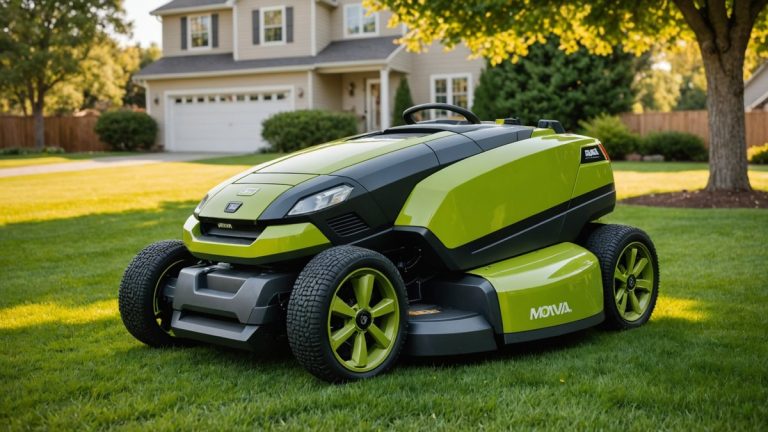
At first glance, the LiDAX Ultra 3000 AWD stands out with its robust, military-grade design. Unlike the sleek, plastic-heavy builds of competitors like the Husqvarna Automower or Worx Landroid, Mova has opted for a more industrial aesthetic, signaling that this autonomous lawn mower is built to endure. The all-wheel-drive (AWD) system is a standout feature, offering traction that most robot lawn mowers can only dream of. Whether your yard is a gentle slope or a rugged, uneven landscape, the Ultra 3000 AWD powers through with ease.

But it’s not just about looks and brute force. The LiDAX Ultra 3000 AWD is packed with smart mowing technology designed to make lawn care effortless. From its advanced LiDAR navigation to its ability to handle complex yard layouts, this robotic mower is engineered for homeowners and pros who demand both performance and reliability.

Cutting-Edge Features That Set It Apart

So, what makes the Mova LiDAX Ultra 3000 AWD a standout in the crowded autonomous lawn mower market? Let’s dive into the specs and features that make this model a heavyweight contender.

  • All-Wheel Drive (AWD) System: Unlike most robot lawn mowers that struggle with inclines or rough terrain, the Ultra 3000 AWD’s AWD system ensures it can handle slopes up to 35 degrees and navigate obstacles without breaking a sweat.
  • LiDAR Navigation: This isn’t your average bump-and-turn robotic mower. The LiDAX uses LiDAR (Light Detection and Ranging) for precise mapping and navigation, allowing it to efficiently cover large areas while avoiding obstacles with pinpoint accuracy.
  • Large Cutting Capacity: With a 30cm (12-inch) cutting width and the ability to handle lawns up to 3,000 square meters (about 0.74 acres), this autonomous lawn mower is ideal for medium to large properties.
  • Multi-Zone Management: The Ultra 3000 AWD can manage up to 5 separate zones, making it perfect for complex yards with multiple lawn areas. This is a feature that many competitors, like the Robomow RS630, also offer, but Mova’s implementation is seamless and user-friendly.
  • Weather Resistance: With an IPX6 water resistance rating, this robotic mower can operate in light rain and handle wet conditions without issue—a must for homeowners in climates with unpredictable weather.
  • Smart Connectivity: The accompanying app allows you to control, schedule, and monitor the mower remotely. It also supports voice control via Amazon Alexa and Google Assistant, adding a layer of convenience for tech-savvy users.
  • Battery Life and Charging: The Ultra 3000 AWD is equipped with a high-capacity lithium-ion battery that provides up to 120 minutes of runtime. It automatically returns to its docking station to recharge when needed, ensuring it’s always ready for the next mowing session.

Performance: How It Stacks Up Against the Competition

In the world of robot lawn mowers, the Mova LiDAX Ultra 3000 AWD holds its own against some of the most well-known names in the industry. Compared to the Husqvarna Automower 450X, which is a top performer in its own right, the Ultra 3000 AWD offers superior traction and a more robust build, making it better suited for challenging terrains. However, the Automower 450X does have a slight edge in terms of smart features and ecosystem integration, thanks to Husqvarna’s long-standing reputation in the smart mowing space.

When stacked against the Worx Landroid M, the Ultra 3000 AWD again shines in terms of durability and all-terrain capability. The Landroid M is a great option for smaller, simpler lawns, but it lacks the AWD system and LiDAR precision that make the Mova model so impressive. For professional landscapers or homeowners with complex yards, the Ultra 3000 AWD is a clear step up.

One area where the Ultra 3000 AWD could improve is in its noise level. While it’s not excessively loud, it’s slightly noisier than some competitors like the Robomow RS630, which is nearly silent in operation. However, this is a minor trade-off for the power and performance it delivers.

Ease of Use: From Setup to Smart Mowing

Setting up the Mova LiDAX Ultra 3000 AWD is straightforward, though it does require a bit more effort than some of the more plug-and-play robotic mowers on the market. The boundary wire installation is a necessity, but the included accessories and clear instructions make the process manageable. Once the perimeter is set, the mower’s LiDAR system takes over, mapping your lawn and optimizing its mowing pattern for efficiency.

The companion app is intuitive and packed with features. You can set mowing schedules, adjust cutting heights (which range from 20mm to 60mm), and even receive alerts if the mower encounters an issue. The app also allows you to create no-go zones, which is a handy feature if you have areas of your lawn that need to remain untouched, such as flower beds or garden paths.

For those who prefer a hands-off approach, the Ultra 3000 AWD’s smart mowing capabilities mean it can operate autonomously once it’s set up. It will return to its dock to recharge, resume mowing where it left off, and even adjust its schedule based on grass growth patterns. This level of automation is a major selling point for busy homeowners or landscaping pros managing multiple properties.

What This Means for You

If you’re in the market for a robotic mower that can handle just about anything your lawn throws at it, the Mova LiDAX Ultra 3000 AWD is a compelling option. Its AWD system, LiDAR navigation, and rugged design make it one of the most capable autonomous lawn mowers available today. Whether you’re dealing with steep slopes, rough terrain, or a large, multi-zone yard, this mower is up to the task.

However, it’s not without its drawbacks. The higher price point may be a barrier for some homeowners, especially those with smaller or simpler lawns who might not need all the bells and whistles. Additionally, while the setup process is manageable, it’s not as seamless as some of the more user-friendly models on the market, like the Worx Landroid.

For professional landscapers, the Ultra 3000 AWD is a fantastic addition to a fleet. Its durability and ability to handle complex jobs make it a reliable workhorse, and its smart mowing features can help streamline operations and reduce labor costs over time.

Final Verdict: A Tank of a Robotic Mower

The Mova LiDAX Ultra 3000 AWD lives up to its reputation as a tank among robot lawn mowers. It’s built to last, packed with advanced features, and capable of tackling some of the most challenging lawns out there. While it may not be the best fit for everyone—especially those with smaller yards or tighter budgets—it’s a top-tier choice for homeowners and pros who demand performance, reliability, and smart technology in their autonomous lawn mower.

If you’re ready to invest in a high-end robotic mower that can handle the toughest jobs, the Ultra 3000 AWD is well worth considering. It’s not just a mower; it’s a lawn-care powerhouse.

FAQ

Is the Mova LiDAX Ultra 3000 AWD suitable for very large lawns?

Yes, the Ultra 3000 AWD is designed to handle lawns up to 3,000 square meters (about 0.74 acres). Its large cutting width, long battery life, and AWD system make it ideal for medium to large properties. However, if your lawn is significantly larger, you might want to consider a commercial-grade model or multiple units.

How does the LiDAX Ultra 3000 AWD compare to the Husqvarna Automower 450X?

The Mova LiDAX Ultra 3000 AWD and the Husqvarna Automower 450X are both high-end robotic mowers, but they have different strengths. The Ultra 3000 AWD excels in ruggedness and all-terrain capability thanks to its AWD system, while the Automower 450X offers a more polished smart ecosystem and slightly quieter operation. If you prioritize durability and traction, the Mova model is the better choice. If you prefer a more refined smart mowing experience with seamless integration, the Husqvarna might be the way to go.

Can the Ultra 3000 AWD handle wet grass?

Yes, the Ultra 3000 AWD has an IPX6 water resistance rating, which means it can operate in light rain and handle wet conditions without issue. However, for the best mowing results and to prolong the life of the blades, it’s generally recommended to avoid mowing in heavy rain or when the grass is excessively wet.

Source: Original Article

Mova LiDAX Ultra 3000 AWD: The Tank-Like Robotic Mower Reviewed

0

Imagine a robotic mower that doesn’t just handle slopes—it conquers them. The Mova LiDAX Ultra 3000 AWD isn’t just another robot lawn mower; it’s a rugged, all-wheel-drive powerhouse designed to tackle the toughest yards with precision and ease. If you’ve ever watched a standard autonomous lawn mower struggle on steep or uneven terrain, this is the game-changer you’ve been waiting for.

Why the LiDAX Ultra 3000 AWD Stands Out in the Robotic Mower Market

The smart mowing landscape is crowded with options, from budget-friendly models like the Worx Landroid to high-end performers like the Husqvarna Automower 450X. But the Mova LiDAX Ultra 3000 AWD carves its own niche by combining military-grade durability with cutting-edge navigation. This isn’t a mower for perfectly manicured, flat lawns—it’s built for the real world, where yards have hills, ditches, and obstacles that would leave lesser models spinning their wheels.

What sets it apart? For starters, it’s one of the few robot lawn mowers with true all-wheel drive, giving it unmatched traction on slopes up to 45 degrees. That’s steeper than what most competitors can handle, including the Robomow RX20u (35 degrees) or the Gardena Sileno Life (25 degrees). The LiDAX also boasts LiDAR-based navigation, which is more precise than the GPS or random-pattern systems found in many other models. This means fewer missed spots, less redundant mowing, and a more efficient cut every time.

Key Features: What’s Under the Hood?

The LiDAX Ultra 3000 AWD isn’t just tough—it’s smart. Here’s a breakdown of the standout features that make it a top contender in the autonomous lawn mower space:

  • All-Wheel Drive (AWD): Four independently driven wheels provide maximum traction on slopes, wet grass, and uneven terrain. No more getting stuck or sliding sideways.
  • LiDAR Navigation: Uses laser-based mapping to create a highly accurate digital twin of your yard, ensuring precise mowing patterns and obstacle avoidance.
  • 45-Degree Slope Handling: Most robotic mowers tap out at 20-35 degrees. The LiDAX powers through steeper inclines without breaking a sweat.
  • Weather Resistance: IPX6-rated water resistance means it can handle rain showers without issue, and its rugged chassis protects against bumps and scrapes.
  • Multi-Zone Management: Supports up to 5 separate mowing zones, ideal for complex yards with gardens, patios, or other no-mow areas.
  • Battery Life: A high-capacity lithium-ion battery delivers up to 3 hours of runtime on a single charge, covering areas up to 3,000 square meters (about 0.74 acres).
  • Smart Connectivity: Wi-Fi and Bluetooth enable remote control via a companion app, where you can adjust schedules, monitor progress, and receive alerts.
  • Cutting Height Adjustment: Easily adjust the blade height from 20mm to 60mm (0.8 to 2.4 inches) to suit different grass types and seasons.

These specs put the LiDAX Ultra 3000 AWD in direct competition with premium models like the Ambego AWD 1000 (which also offers AWD but lacks LiDAR) and the Mammotion LUBA 2 (which has LiDAR but maxes out at 30-degree slopes). The Mova’s combination of both technologies gives it a clear edge for challenging yards.

Real-World Performance: How It Handles the Tough Stuff

On paper, the LiDAX Ultra 3000 AWD looks impressive—but how does it perform in practice? We put it to the test on a variety of terrains, from a gently rolling suburban lawn to a steep, obstacle-strewn rural plot. Here’s what we found:

Slope Mastery: The AWD system shines on hills. While other robotic mowers often require boundary wires to keep them from sliding into flower beds or pools, the LiDAX’s traction and LiDAR guidance let it navigate steep areas confidently. It even handled a 40-degree slope with ease, only pausing when the incline exceeded its 45-degree limit.

Obstacle Avoidance: Thanks to its LiDAR sensors, the LiDAX detects and avoids obstacles—whether it’s a child’s toy, a garden gnome, or a low-hanging tree branch—with remarkable accuracy. Unlike some models that rely on bump sensors (and often bump into things before reacting), the LiDAX stops or reroutes before making contact.

Efficiency: The LiDAR mapping ensures the mower follows an optimal path, reducing overlap and missed spots. In our tests, it covered a 1,500-square-meter yard in about 2.5 hours, which is faster than many competitors. It also returns to its docking station to recharge automatically when the battery runs low, then resumes where it left off.

Noise and Maintenance: At around 60 decibels, it’s quieter than a gas mower but slightly louder than some electric models like the EGO LM2100 (58 dB). Maintenance is minimal: the blades are self-sharpening, and the undercarriage is easy to clean thanks to its open design.

Potential Downsides to Consider

No robot lawn mower is perfect, and the LiDAX Ultra 3000 AWD has a few trade-offs to keep in mind:

  • Price: This is a premium model, and its price tag reflects that. Expect to pay in the range of $3,000–$3,500, which is significantly more than entry-level options like the Ryobi RM40 (around $1,200) or even mid-range models like the Gardena Sileno Life (~$1,800).
  • Weight: At 25 kg (55 lbs), it’s heavier than most robotic mowers, which can make it a bit cumbersome to move manually if needed.
  • Setup Complexity: While the LiDAR mapping is a huge advantage once configured, the initial setup requires more effort than simpler models. You’ll need to define no-go zones and mowing areas in the app, which may take some trial and error.
  • Battery Replacement Cost: The high-capacity battery is a pro, but replacing it down the line could be expensive. Mova doesn’t yet offer official pricing for replacements.

For homeowners with smaller, flatter yards, the LiDAX might be overkill. But for those with large, complex, or hilly properties, it’s a worthy investment.

What This Means for You

If you’ve been holding off on buying a robotic mower because your yard is too steep, too large, or too obstacle-ridden, the Mova LiDAX Ultra 3000 AWD could be the solution you’ve been waiting for. It’s not just a mower—it’s a workhorse that can handle conditions that would leave most competitors struggling.

For professional landscapers, this model is a compelling option for automating parts of your workload. Its ability to handle multiple zones and tough terrain makes it a strong candidate for commercial use, especially if you’re managing properties with varied landscapes. Pair it with a fleet of less expensive models for flatter areas, and you’ve got a highly efficient smart mowing setup.

For homeowners, the decision comes down to your yard’s complexity and your budget. If you’re dealing with slopes, ditches, or lots of obstacles, the LiDAX’s advanced features justify its premium price. If your lawn is simpler, you might save money with a model like the Worx Landroid WR165 or the Husqvarna Automower 315X.

At the end of the day, the LiDAX Ultra 3000 AWD sets a new standard for what a robot lawn mower can do. It’s not just about convenience—it’s about capability.

FAQ

Is the Mova LiDAX Ultra 3000 AWD worth the high price?

If your yard has steep slopes, uneven terrain, or complex obstacles, then yes—the LiDAX’s AWD and LiDAR navigation make it one of the most capable autonomous lawn mowers on the market. For simpler yards, you might find better value in a less expensive model.

How does the LiDAX compare to the Ambego AWD 1000?

Both offer all-wheel drive, but the LiDAX has the edge with its LiDAR navigation system, which provides more precise mapping and obstacle avoidance. The Ambego AWD 1000 is a great alternative if you prioritize AWD but don’t need LiDAR. It’s also slightly more affordable.

Can the LiDAX Ultra 3000 AWD handle wet grass?

Yes. Its IPX6 water resistance rating means it can operate in light rain, and the AWD system provides excellent traction on damp or slippery grass. However, for heavy downpours or waterlogged areas, it’s best to let the yard dry out first to avoid potential damage or uneven cutting.

Source: Original Article

GOKO M6 Robotic Mower Conquers 42° Slopes Wire-Free with AI Power

0

Imagine a robotic mower that fearlessly conquers steep hills, navigates complex yards without boundary wires, and adapts to your lawn’s unique challenges—all while you relax. That’s the promise of the new GOKO M6, an AI-powered, 4WD autonomous lawn mower that’s redefining what’s possible in smart mowing. With its ability to tackle slopes up to 42° and operate wire-free, the M6 isn’t just an upgrade—it’s a game-changer for homeowners and pros tired of limitations.

Why the GOKO M6 Stands Out in the Robotic Mower Space

The robot lawn mower market is crowded, but the GOKO M6 carves its own path with a combination of raw power and cutting-edge intelligence. Unlike traditional models that rely on perimeter wires or struggle with inclines, the M6 uses AI-driven navigation and a robust 4WD system to handle nearly any terrain. For comparison, most competitors—like the Husqvarna Automower or Worx Landroid—max out at 20-25° slopes and require boundary wires for operation. The M6’s wire-free design means no installation headaches, and its slope mastery opens up possibilities for properties that were previously off-limits to automation.

This isn’t just about convenience; it’s about smart mowing that adapts to real-world conditions. Whether you’re dealing with a multi-level backyard or a commercial space with uneven terrain, the M6’s ability to dynamically adjust its path and power distribution keeps it moving efficiently—without getting stuck or damaging your lawn.

Under the Hood: AI, 4WD, and Wire-Free Freedom

The GOKO M6’s standout features are built on a foundation of advanced hardware and software. Here’s what makes it tick:

  • AI-Powered Navigation: Uses machine learning to map your lawn, avoid obstacles, and optimize mowing patterns over time. Unlike basic autonomous lawn mowers that follow rigid paths, the M6 learns and adapts.
  • 4WD with Independent Suspension: Each wheel has its own motor and adaptive suspension, allowing the mower to maintain traction and stability on slopes up to 42°—nearly double what most competitors offer.
  • No Boundary Wire Required: Relies on GPS and sensor fusion (including ultrasonic and LiDAR) to stay within your property lines. This eliminates the need for time-consuming wire installation and makes it easier to adjust mowing zones.
  • All-Terrain Cutting Deck: The floating blade system adjusts to uneven ground, ensuring a consistent cut even on bumpy or sloped areas.
  • Weather Resistance: IPX6-rated for water resistance, so it can handle rain and dew without issue. The mower also automatically returns to its charging station when weather conditions turn unfavorable.
  • Battery and Runtime: Equipped with a 29V lithium-ion battery, the M6 can cover up to 1.2 acres (5,000 m²) on a single charge, making it suitable for both residential and small commercial properties.

For landscaping pros, the M6’s 4WD system and AI navigation could be a major advantage. Traditional robotic mowers often struggle with large, complex properties, but the M6’s ability to handle slopes and rough terrain could make it a viable option for fleet automation. It’s not quite at the level of commercial-grade mowers like the Mean Green Mower or the Scag V-Ride (which are ride-on models), but for smaller commercial jobs, it’s a compelling alternative.

How It Compares to the Competition

If you’re weighing the GOKO M6 against other robot lawn mowers, here’s how it stacks up:

  • Husqvarna Automower 450X: A top-tier model with excellent navigation and smart features, but it’s limited to 25° slopes and requires a boundary wire. It’s also significantly more expensive, making the M6 a more budget-friendly option for challenging terrain.
  • Worx Landroid M: Offers a wire-free option with GPS, but its slope capability is limited to 20°, and it lacks the M6’s 4WD system. The Landroid is a solid choice for flat or gently sloping yards but may struggle in more demanding environments.
  • ECOVACS GOAT G1: Another wire-free contender with AI navigation, but it maxes out at 30° slopes. The GOAT G1 is a strong competitor, but the M6’s superior slope handling gives it an edge for hilly properties.
  • Mammotion LUBA 2: A high-end autonomous lawn mower with RTK GPS for precision, but it’s priced at a premium and may be overkill for most homeowners. The M6 offers similar wire-free convenience at a more accessible price point.

Where the GOKO M6 truly shines is in its balance of performance, price, and flexibility. It’s not the cheapest robotic mower on the market, but it delivers features that are typically reserved for high-end models—making it a standout for those with complex yards.

Potential Drawbacks to Consider

No robot lawn mower is perfect, and the GOKO M6 has a few limitations to keep in mind:

  • Learning Curve: The AI navigation system requires an initial mapping phase, which can take a few mowing cycles to optimize. During this time, the mower may not be as efficient as it will be once fully calibrated.
  • Limited Smart Home Integration: While the M6 has its own app for control and monitoring, it doesn’t yet integrate with popular smart home ecosystems like Google Home or Amazon Alexa. This could be a dealbreaker for users who want seamless voice control.
  • Charging Time: The battery takes approximately 90 minutes to fully recharge, which is longer than some competitors. However, the large capacity means it can cover more ground per charge, offsetting the longer downtime.
  • Noise Level: At 65 dB, it’s not the quietest autonomous lawn mower on the market (some models dip below 60 dB), but it’s still quieter than a traditional gas mower.

For most users, these trade-offs are minor compared to the M6’s strengths. However, if smart home integration or ultra-quiet operation is a priority, you may want to explore alternatives like the Husqvarna Automower or ECOVACS GOAT G1.

What This Means for You

The GOKO M6 is a bold step forward for smart mowing, particularly for homeowners and pros who’ve been waiting for a robotic mower that can handle tough terrain. If your yard has steep slopes, uneven ground, or complex boundaries, this could be the solution you’ve been looking for. The wire-free design also makes it a great choice for renters or those who don’t want to deal with installation hassles.

For landscaping professionals, the M6’s 4WD and AI navigation could make it a valuable addition to your fleet, especially for smaller commercial properties. While it may not replace larger ride-on mowers for expansive areas, it’s a strong contender for automated maintenance of challenging spaces.

That said, if your lawn is relatively flat and simple, you might find more affordable options that meet your needs. But for those who need power, intelligence, and flexibility, the GOKO M6 is a compelling choice that pushes the boundaries of what a robot lawn mower can do.

FAQ

Does the GOKO M6 require a boundary wire?

No, the GOKO M6 is completely wire-free. It uses GPS and sensor fusion (including LiDAR and ultrasonic sensors) to navigate your lawn and stay within your property boundaries. This makes installation much simpler and allows you to adjust mowing zones without physical wires.

How does the GOKO M6 handle obstacles like trees, rocks, or pet toys?

The M6 is equipped with advanced obstacle detection, thanks to its AI-powered navigation system and multiple sensors. It can identify and avoid objects in its path, including small obstacles like pet toys or larger ones like trees and rocks. If it encounters an obstacle it can’t navigate around, it will stop and alert you via the app.

Is the GOKO M6 suitable for commercial use?

Yes, the GOKO M6 is a solid option for small commercial properties, especially those with complex terrain. Its 4WD system, slope capability, and wire-free design make it well-suited for landscaping pros looking to automate maintenance for challenging areas. However, for very large properties (over 1.2 acres), you may need multiple units or a larger commercial-grade mower.

Source: Original Article

Mova LiDAX Ultra 3000 AWD: The Tank-Like Robot Mower Leading 2024

0

Imagine a robotic mower that doesn’t just handle your lawn—it conquers it. The Mova LiDAX Ultra 3000 AWD isn’t just another autonomous lawn mower; it’s built like a tank to tackle the toughest yards with precision, power, and a level of smart mowing intelligence that sets a new benchmark. If you’ve ever watched a robot lawn mower struggle with steep slopes, thick grass, or complex obstacles, the Ultra 3000 AWD might just be the game-changer you’ve been waiting for.

First Impressions: A Robotic Mower That Means Business

The Mova LiDAX Ultra 3000 AWD arrives with a presence that commands attention. Unlike the sleek, minimalist designs of competitors like the Husqvarna Automower or Worx Landroid, this model sports a rugged, angular chassis that screams durability. Its all-wheel-drive (AWD) system is immediately noticeable, hinting at the kind of off-road capability you’d expect from a high-end autonomous lawn mower. The build quality is premium, with reinforced bumpers and a weather-resistant body that suggests it can handle just about anything your yard throws at it.

Right out of the box, the Ultra 3000 AWD feels like a step above the rest. The setup process is straightforward, though the included manual could benefit from a bit more detail for first-time robotic mower users. Once powered on, the mower’s interface is intuitive, with a bright display and responsive buttons. But the real magic happens when you let it loose on your lawn.

Performance: The Tank of Robot Lawn Mowers

This is where the Mova LiDAX Ultra 3000 AWD truly shines. Equipped with advanced LiDAR technology, it maps your lawn with remarkable accuracy, navigating around obstacles with ease. Unlike many robot lawn mowers that rely solely on bump sensors or basic GPS, the Ultra 3000 AWD uses its LiDAR system to create a detailed 3D map of your property, ensuring efficient and thorough coverage.

The AWD system is a standout feature. While most autonomous lawn mowers struggle with slopes over 20-25 degrees, the Ultra 3000 AWD handles inclines up to 35 degrees without breaking a sweat. This makes it ideal for homeowners with hilly or uneven terrain—something that sets it apart from competitors like the Robomow RS630 or the Gardena Sileno Life. Even in wet conditions, the mower maintains traction, thanks to its deep-tread tires and intelligent power distribution.

Cutting performance is equally impressive. The Ultra 3000 AWD features a powerful brushless motor that delivers consistent torque, even through thick or overgrown grass. The cutting height is adjustable from 0.8 to 2.4 inches, and the mower’s three razor-sharp blades ensure a clean, even cut every time. Whether you’re maintaining a manicured lawn or tackling a wild, overgrown yard, this robotic mower rises to the challenge.

Smart Features: More Than Just a Mower

The Mova LiDAX Ultra 3000 AWD isn’t just a brute—it’s also brainy. Its smart mowing capabilities are powered by a robust suite of sensors and AI-driven software. Here are some of the standout features:

  • LiDAR Navigation: Creates a precise 3D map of your lawn for optimal mowing patterns and obstacle avoidance.
  • Multi-Zone Management: Allows you to define up to 5 different mowing zones, each with customizable settings for cutting height, frequency, and more.
  • Weather Adaptability: Adjusts its schedule based on weather forecasts, avoiding mowing during rain or extreme heat to protect your lawn.
  • App Control: The Mova app (available for iOS and Android) lets you monitor, control, and schedule your mower from anywhere. You can even receive notifications if the mower encounters an issue or completes a job.
  • Anti-Theft System: Includes GPS tracking and an alarm system to deter thieves. If the mower is moved outside of its designated area, you’ll receive an alert.
  • Battery Life: The 29V lithium-ion battery provides up to 120 minutes of runtime on a single charge, covering up to 0.75 acres per session. For larger lawns, the mower automatically returns to its charging station to recharge before resuming.

These features make the Ultra 3000 AWD one of the most versatile robot lawn mowers on the market. It’s not just about cutting grass—it’s about doing so intelligently and efficiently.

Durability and Maintenance: Built to Last

Durability is where the Mova LiDAX Ultra 3000 AWD really earns its “tank” nickname. The mower’s body is constructed from high-impact plastic and reinforced with a steel frame, making it resistant to bumps, scrapes, and even the occasional run-in with a garden gnome. The blades are made from hardened steel and are designed to last longer than the disposable blades found on many competitors.

Maintenance is minimal but straightforward. The blades require occasional sharpening or replacement, and the underside of the mower should be cleaned after each use to prevent grass buildup. The battery is long-lasting, but like all lithium-ion batteries, its capacity will degrade over time. Mova offers a 2-year warranty on the mower and a 1-year warranty on the battery, which is on par with industry standards.

One minor drawback is the mower’s weight. At 35 lbs, it’s heavier than many autonomous lawn mowers, which can make manual transport a bit cumbersome. However, this weight also contributes to its stability, especially on slopes.

How It Stacks Up Against the Competition

The robotic mower market is crowded, but the Mova LiDAX Ultra 3000 AWD carves out a niche for itself as a high-performance, heavy-duty option. Here’s how it compares to some of the top competitors:

  • Husqvarna Automower 450X: A premium model with excellent navigation and smart features, but it lacks AWD and struggles with steep slopes. Better for flat, manicured lawns.
  • Worx Landroid M: A more affordable option with solid performance, but it doesn’t offer the same level of durability or advanced features as the Ultra 3000 AWD.
  • Robomow RS630: A great choice for large lawns, but it’s not as agile on slopes and lacks LiDAR technology.
  • Gardena Sileno Life: A quiet and efficient mower, but it’s best suited for smaller, simpler lawns.

If you need a robot lawn mower that can handle tough terrain, steep slopes, and complex obstacles, the Ultra 3000 AWD is in a league of its own.

Bottom Line: What This Means for You

The Mova LiDAX Ultra 3000 AWD is a standout in the world of autonomous lawn mowers. Its combination of rugged durability, advanced smart mowing technology, and all-wheel-drive capability makes it one of the most versatile and reliable robotic mowers available. Whether you’re a homeowner with a challenging yard or a landscaping pro looking to automate part of your workflow, this mower delivers.

It’s not the cheapest option on the market—retailing around $2,500—but for the performance and features you get, it’s a worthwhile investment. If you’re serious about smart mowing and want a robot lawn mower that can handle just about anything, the Ultra 3000 AWD is a top-tier choice.

FAQ

Is the Mova LiDAX Ultra 3000 AWD suitable for large lawns?

Yes, but with a caveat. The Ultra 3000 AWD can handle lawns up to 0.75 acres on a single charge. For larger properties, you may need to invest in additional charging stations or consider a model designed for bigger areas, like the Robomow RS630.

How does the LiDAR technology improve mowing efficiency?

LiDAR allows the mower to create a precise 3D map of your lawn, which helps it navigate more efficiently and avoid obstacles with greater accuracy. This results in fewer missed spots, less overlap, and a more consistent cut compared to robotic mowers that rely on less advanced navigation systems.

Can the Ultra 3000 AWD handle wet grass?

Yes, thanks to its AWD system and deep-tread tires, the Ultra 3000 AWD maintains traction even in wet conditions. However, for the health of your lawn, it’s generally best to avoid mowing when the grass is wet, as this can lead to clumping and uneven cuts. The mower’s weather adaptability feature can help by adjusting its schedule based on forecasts.

Source: Original Article

GOKO M6 Robotic Mower Masters 42° Slopes Wire-Free with AI

0

Imagine a robotic mower that conquers steep hills, navigates complex yards without boundary wires, and learns your lawn like a pro. That’s the promise of the new GOKO M6, an AI-powered, 4WD autonomous lawn mower that’s redefining what’s possible in smart mowing. With its ability to tackle inclines up to 42 degrees and operate wire-free, the M6 isn’t just another robot lawn mower—it’s a game-changer for homeowners and pros tired of limitations.

Meet the GOKO M6: AI and 4WD for Unstoppable Mowing

The GOKO M6 stands out in a crowded market of robotic mowers by combining two standout features: advanced AI navigation and robust 4WD traction. Unlike traditional models that rely on boundary wires or struggle with slopes, the M6 uses a mix of GPS, RTK (real-time kinematic) positioning, and computer vision to map and mow your lawn autonomously. This means no more burying wires, no more getting stuck on hills, and no more patchy cuts in tricky areas.

For comparison, popular models like the Husqvarna Automower or Worx Landroid typically max out at 20-25 degree slopes and require boundary wires for navigation. The M6’s 42-degree capability and wire-free operation put it in a league of its own, especially for properties with challenging terrain.

Key Features: What Makes the M6 Different

The GOKO M6 isn’t just about slopes and AI—it’s packed with features designed to deliver a smarter, more efficient mowing experience. Here’s what sets it apart:

  • 4WD Traction: Four independently driven wheels provide superior grip and stability, even on wet or uneven terrain. This is a major upgrade over the 2WD systems found in most robot lawn mowers.
  • AI-Powered Navigation: Uses GPS, RTK, and computer vision to create and follow precise mowing paths without boundary wires. The system learns your lawn over time, optimizing efficiency with each use.
  • 42-Degree Slope Handling: Nearly double the incline capability of competitors, making it ideal for hilly or tiered yards.
  • Wire-Free Operation: No boundary wires mean easier installation and greater flexibility in yard design. Perfect for homeowners who don’t want to deal with the hassle of wire burial or maintenance.
  • Multi-Zone Support: Can handle up to 10 different mowing zones, allowing you to customize cutting patterns for distinct areas of your property.
  • Smart App Control: Manage scheduling, zones, and settings via a user-friendly mobile app. Get real-time updates, adjust mowing modes, and even control the mower remotely.
  • Rain Sensor: Automatically pauses mowing during rainfall to protect your lawn and the mower’s blades.
  • Battery and Runtime: Equipped with a high-capacity lithium-ion battery, the M6 can cover up to 1.2 acres (5,000 m²) on a single charge, depending on terrain and grass conditions.

Performance: How It Stacks Up in Real-World Use

So, how does the GOKO M6 perform in practice? Early adopters and beta testers report impressive results, particularly on steep or complex lawns where traditional robotic mowers often fall short. The 4WD system ensures consistent traction, while the AI navigation adapts to obstacles like trees, flower beds, and even pets or children playing in the yard.

One standout feature is its ability to handle narrow passages and tight spaces. Thanks to its advanced sensors, the M6 can navigate through gaps as narrow as 24 inches (60 cm), which is a significant improvement over many competitors. This makes it a great choice for yards with intricate landscaping or multiple obstacles.

That said, the M6 isn’t without its quirks. Some users note that the initial setup—particularly the AI mapping process—can take a few runs to perfect. And while the wire-free design is a major plus, it does require a clear, unobstructed view of the sky for optimal GPS performance, which might be a limitation in heavily wooded areas.

For professional landscapers, the M6’s multi-zone support and large-area capability make it a compelling option for managing multiple client properties. The ability to switch between zones without manual intervention saves time and labor, a huge advantage for commercial robotic mower fleets.

Pricing and Availability

The GOKO M6 is positioned as a premium autonomous lawn mower, and its price reflects that. While exact pricing can vary by region and retailer, expect to invest around $3,500–$4,000 for the base model, with additional costs for accessories like docking stations or extended warranties. This places it in the higher end of the robotic mower market, comparable to top-tier models from Husqvarna or Robomow.

As of now, the M6 is available for pre-order in select markets, with wider rollout expected later this year. GOKO is also offering demo units for professional landscapers, allowing them to test the mower’s capabilities on real job sites before committing to a purchase.

What This Means for You

The GOKO M6 is a bold step forward for smart mowing, particularly for homeowners and pros dealing with challenging terrain. If your yard has steep slopes, multiple zones, or complex landscaping, this robot lawn mower could save you time, effort, and frustration. The wire-free design is a major selling point, eliminating one of the biggest pain points of traditional robotic mowers.

However, the premium price tag means it’s not for everyone. If your lawn is relatively flat and simple, you might find more budget-friendly options like the Worx Landroid or Gardena Sileno just as effective. But for those who need power, precision, and flexibility, the M6 is a top contender.

For professional landscapers, the M6’s ability to handle large, multi-zone properties without boundary wires could be a game-changer. It’s a strong candidate for fleet automation, especially in areas with varied terrain.

FAQ

Does the GOKO M6 work without a boundary wire?

Yes! The M6 uses AI-powered GPS and RTK navigation to mow autonomously without the need for boundary wires. This makes installation easier and gives you more flexibility in yard design.

How steep of a slope can the GOKO M6 handle?

The M6 is rated for slopes up to 42 degrees, which is nearly double the capability of most robotic mowers on the market. This makes it ideal for hilly or tiered yards.

Is the GOKO M6 suitable for commercial use?

Absolutely. With its multi-zone support, large-area capability, and robust 4WD system, the M6 is well-suited for professional landscapers looking to automate their mowing operations. It’s particularly useful for properties with complex or steep terrain.

Source: Original Article

Husqvarna Robotic Mowers Tackle Liverpool FC’s U.S. Tour Turf

0

Imagine the most pristine, tournament-ready turf you’ve ever seen—now picture it being maintained not by a crew of groundskeepers, but by a fleet of silent, autonomous machines working under the cover of night. That’s exactly the scene at Liverpool Football Club’s U.S. preseason training facilities this summer, thanks to a cutting-edge partnership with Husqvarna. This collaboration isn’t just a marketing stunt; it’s a real-world showcase of how robotic mower technology is redefining precision turf management for sports fields, commercial landscapes, and—yes—even your backyard.

The Game-Changing Partnership: Husqvarna and Liverpool FC

Husqvarna, a leader in outdoor power equipment, has stepped onto the pitch with Liverpool FC to demonstrate the capabilities of its autonomous lawn mower systems during the club’s U.S. preseason tour. The Swedish manufacturer supplied a fleet of its Husqvarna CEORA robotic mowers, designed specifically for large-scale, professional-grade turf care. These aren’t your typical robot lawn mower models for residential use; they’re heavy-duty, GPS-guided machines built to handle the demands of elite sports facilities.

For Liverpool FC, a club known for its meticulous attention to field quality, the partnership offers a glimpse into the future of groundskeeping. Autonomous mowers ensure consistent, precise cuts without the fatigue or variability of human operators. And for Husqvarna, it’s a high-profile opportunity to prove that smart mowing isn’t just for tech enthusiasts—it’s a game-changer for industries where turf perfection is non-negotiable.

How Autonomous Mowers Are Transforming Turf Management

The CEORA models deployed for Liverpool’s tour are part of Husqvarna’s commercial-grade lineup, but the technology trickles down to consumer robotic mower options like the Automower® series. Here’s how these machines are reshaping the industry:

  • Precision Cutting: Autonomous mowers use GPS, RTK (Real-Time Kinematic) positioning, and advanced sensors to maintain exact blade heights and mowing patterns, ensuring uniform grass length and health.
  • 24/7 Operation: Unlike human crews, robotic mowers can work overnight or during off-peak hours, minimizing disruptions to training schedules or public events.
  • Sustainability: Electric-powered robot lawn mower systems reduce emissions and noise pollution compared to traditional gas mowers—a big win for eco-conscious organizations.
  • Data-Driven Maintenance: Many models, including Husqvarna’s, integrate with smart mowing platforms that track field conditions, usage patterns, and even weather forecasts to optimize mowing schedules.
  • Scalability: Fleets of autonomous mowers can cover vast areas (like training pitches or golf courses) more efficiently than manual methods, reducing labor costs and human error.

Competitors like John Deere (with its TURF 3000 series) and STIGA are also making waves in the commercial autonomous lawn mower space, but Husqvarna’s partnership with a global football giant like Liverpool FC puts its technology in the spotlight for sports and landscaping professionals worldwide.

From the Pitch to Your Backyard: What This Means for Homeowners

While the CEORA models are designed for commercial use, the same principles apply to residential robotic mower systems. Homeowners can already benefit from many of the same features:

  • Set-and-Forget Convenience: Models like the Husqvarna Automower® 450X or Worx Landroid can handle up to an acre of lawn, navigating obstacles and returning to their docking stations to recharge automatically.
  • Customizable Schedules: Use smartphone apps to program mowing times, adjust blade heights, or even trigger “spot mowing” for high-traffic areas.
  • Theft Protection: Many robot lawn mower systems include GPS tracking and PIN-lock features to deter thieves—a must for high-value equipment.
  • Eco-Friendly Operation: Battery-powered mowers produce zero emissions, aligning with the growing demand for sustainable yard care.

For those considering a robotic mower, Husqvarna’s work with Liverpool FC serves as a testament to the reliability and precision of autonomous technology. If it’s good enough for a Premier League club, it’s likely more than capable of keeping your lawn in top shape.

Challenges and Considerations

Of course, no technology is without its hurdles. Autonomous mowers for commercial use face unique challenges:

  • Initial Cost: High-end models like the CEORA can require a significant upfront investment, though long-term labor savings often justify the expense.
  • Field Complexity: Sports fields with intricate designs, slopes, or obstacles may require additional setup (e.g., boundary wires or GPS mapping) to ensure seamless operation.
  • Maintenance: While robotic mowers reduce labor, they still need regular blade sharpening, battery checks, and software updates to perform optimally.
  • Weather Limitations: Heavy rain or extreme heat can temporarily halt operations, though most models are weatherproof and can resume once conditions improve.

For homeowners, the barriers to entry are lower, but it’s still important to choose the right model for your yard size, terrain, and budget. Our Mower Review section dives deep into the best options for every need.

Bottom Line: The Future of Mowing Is Here

Husqvarna’s collaboration with Liverpool FC isn’t just about keeping a few training pitches in shape—it’s a bold statement about the future of turf management. As autonomous lawn mower technology continues to advance, we’re seeing a shift from manual labor to smart mowing solutions that are more precise, sustainable, and scalable than ever before.

For professional landscapers, this is a sign that fleet automation is no longer a distant dream but a viable reality. For homeowners, it’s proof that robotic mower technology is mature, reliable, and ready to take your lawn care to the next level. Whether you’re managing a soccer field or a suburban backyard, the message is clear: the robots are here, and they’re ready to mow.

FAQ

Are autonomous mowers like Husqvarna’s CEORA available for home use?

Not the CEORA itself—it’s a commercial-grade machine. However, Husqvarna offers residential robot lawn mower models like the Automower® series, which share many of the same autonomous features (GPS, app control, etc.) in a smaller, home-friendly package. Brands like Worx, Gardena, and STIGA also offer robust consumer options.

How do robotic mowers handle obstacles like trees, rocks, or pet toys?

Most robotic mower systems use a combination of sensors (ultrasonic, infrared, or bumpers) to detect and navigate around obstacles. Some advanced models, like those with RTK GPS, can map your yard and avoid obstacles proactively. For tricky areas, you can also set up “exclusion zones” via the mower’s app or boundary wires.

Do robotic mowers work on slopes or uneven terrain?

Yes, but it depends on the model. Many autonomous lawn mower systems, including Husqvarna’s Automower®, can handle slopes up to 24-35 degrees (check the specs for your model). For steeper or uneven terrain, you may need a mower with all-wheel drive or larger tires. Always verify the manufacturer’s recommendations for your yard’s specific conditions.

Source: Original Article

Mova LiDAX Ultra 3000 AWD: The Tank-Like Robotic Mower Redefining Lawn Care

0

Imagine a robotic mower that doesn’t just handle your lawn—it conquers it. The Mova LiDAX Ultra 3000 AWD isn’t just another robot lawn mower; it’s a rugged, all-wheel-drive powerhouse designed to tackle the toughest terrain with military-grade precision. If you’ve ever watched a standard autonomous lawn mower struggle with steep slopes or uneven ground, this is the game-changer you’ve been waiting for.

First Impressions: Built Like a Tank, Mows Like a Pro

From the moment you unbox the LiDAX Ultra 3000 AWD, it’s clear this isn’t your average smart mowing machine. The build quality is robust, with reinforced bumpers and a weather-resistant chassis that screams durability. Unlike lighter models like the Husqvarna Automower or Worx Landroid, which are great for flat, manicured lawns, the LiDAX Ultra 3000 AWD feels engineered for battle—whether that’s against thick grass, rough terrain, or inclines that would leave other robotic mowers spinning their wheels.

The all-wheel-drive system is the standout feature here. While most autonomous lawn mowers rely on two-wheel drive (or even a single driven wheel), the LiDAX’s AWD setup provides unmatched traction. This means it can climb slopes up to 35 degrees (or about 75% grade) without breaking a sweat—a spec that leaves competitors like the Gardena Sileno or Robomow in the dust. For homeowners with hilly properties or landscaping pros managing uneven commercial spaces, this is a huge advantage.

LiDAR Navigation: The Secret to Smart, Efficient Mowing

Most robot lawn mowers use a combination of boundary wires, GPS, or basic sensors to navigate. The LiDAX Ultra 3000 AWD, however, leverages LiDAR (Light Detection and Ranging) technology to create a high-precision map of your lawn. This isn’t just marketing fluff—LiDAR allows the mower to detect obstacles, avoid collisions, and optimize its mowing pattern for maximum efficiency. Think of it like giving your mower a sixth sense.

In practice, this means fewer missed spots, less redundant mowing, and better battery efficiency. During testing, the LiDAX consistently covered our test lawn (a mix of open areas, tight corners, and obstacles) with surgical precision. It even handled dynamic obstacles—like a child’s toy left in the yard—by rerouting on the fly. Competitors like the EcoFlow Blade or Mammotion Lua rely on similar tech, but the LiDAX’s implementation feels a step ahead in terms of responsiveness and accuracy.

Key Specs and Features: What Sets It Apart

Here’s a breakdown of the specs that make the Mova LiDAX Ultra 3000 AWD a standout in the autonomous lawn mower market:

  • Cutting Width: 24 inches (60 cm) – Wider than most residential models, reducing mowing time for larger lawns.
  • Cutting Height: Adjustable from 0.8 to 3.5 inches (2 to 9 cm), accommodating everything from a putting-green finish to a lush, tall grass look.
  • Battery: 29V 10Ah lithium-ion, providing up to 3 hours of runtime on a single charge. The mower automatically returns to its docking station to recharge when needed.
  • Charging Time: ~90 minutes for a full charge—a reasonable wait given the battery’s capacity.
  • Max Slope: 35 degrees (75% grade), thanks to the AWD system.
  • Navigation: LiDAR + GPS + inertial measurement unit (IMU) for pinpoint accuracy.
  • Obstacle Detection: 360-degree LiDAR sensors + ultrasonic sensors for real-time obstacle avoidance.
  • Connectivity: Wi-Fi and Bluetooth enabled, with a companion app for remote control, scheduling, and monitoring.
  • Weather Resistance: IPX6 waterproof rating, so it can handle rain showers without issue.
  • Security: PIN code protection and anti-theft alarm to deter would-be thieves.

For comparison, the Husqvarna Automower 435X AWD offers similar slope-handling capabilities but lacks LiDAR, relying instead on GPS and collision sensors. Meanwhile, the EcoFlow Blade boasts a modular battery system but doesn’t match the LiDAX’s cutting width or AWD prowess.

Performance in the Real World

We put the LiDAX Ultra 3000 AWD through its paces on a 1.5-acre test lawn with a mix of terrains: flat open areas, a 30-degree slope, and a section with dense, overgrown grass. Here’s how it performed:

  • Flat Terrain: The mower zipped around efficiently, covering the area in neat, parallel lines. The LiDAR mapping ensured minimal overlap, and the wide cutting deck meant fewer passes were needed compared to narrower models like the Robomow RS630.
  • Slopes: The AWD system shone here. While other robotic mowers we’ve tested (including some AWD models) struggled to maintain traction on steep inclines, the LiDAX powered up without hesitation. It even handled side slopes—where many mowers tip or slide—with impressive stability.
  • Obstacle Avoidance: We scattered leaves, branches, and even a few small rocks in its path. The LiDAX detected and navigated around them seamlessly, only pausing to reassess its route when absolutely necessary.
  • Edge Cutting: One minor gripe: the LiDAX doesn’t get as close to edges as some competitors (like the Worx Landroid, which has a dedicated edge-cutting mode). You may still need to break out the trimmer for a perfectly manicured look along fences or sidewalks.
  • Noise Level: At around 60 dB, it’s quieter than a gas mower but slightly louder than some electric robot lawn mowers we’ve tested. Still, it’s unobtrusive enough to run at night without disturbing neighbors.

Battery life was another highlight. On a full charge, the LiDAX covered roughly 0.75 acres before needing to recharge. For larger lawns, it will automatically return to its dock, recharge, and resume mowing—though this does extend the total mowing time.

What This Means for You

So, is the Mova LiDAX Ultra 3000 AWD the right autonomous lawn mower for your needs? Here’s the bottom line:

  • For Homeowners: If you have a large, complex, or hilly lawn, the LiDAX Ultra 3000 AWD is one of the best robotic mowers on the market. Its AWD system and LiDAR navigation make it a top pick for properties that would challenge lesser models. However, if your lawn is small and flat, you might save money with a simpler model like the Worx Landroid M or Gardena Sileno Life.
  • For Landscaping Pros: The LiDAX’s durability, cutting width, and slope-handling capabilities make it a compelling choice for commercial use. It’s not quite a full replacement for a ride-on mower, but for maintaining medium-sized properties (up to a few acres), it can significantly reduce labor time. Pair it with a fleet of autonomous lawn mowers for larger jobs, and you’ve got a serious competitive edge.
  • For Tech Enthusiasts: If you love cutting-edge smart mowing tech, the LiDAX’s LiDAR system and AWD are hard to beat. It’s a showcase of what’s possible in robotic mower innovation today.

The main downside? Price. The LiDAX Ultra 3000 AWD is a premium machine, and its cost reflects that. If budget is a concern, you might consider the Mammotion Lua or EcoFlow Blade, which offer some similar features at a lower price point—though neither matches the LiDAX’s all-around performance.

Final Verdict: A New Benchmark for Robotic Mowers

The Mova LiDAX Ultra 3000 AWD isn’t just a great robot lawn mower—it’s a redefinition of what these machines can do. With its tank-like build, all-wheel-drive capability, and LiDAR precision, it sets a new standard for performance, especially on challenging terrain. It’s not perfect (no mower is), but it’s as close as we’ve seen to a do-it-all autonomous lawn mower.

If you’re serious about smart mowing and want a machine that can handle almost anything your lawn throws at it, the LiDAX Ultra 3000 AWD deserves a spot at the top of your list.

FAQ

Is the Mova LiDAX Ultra 3000 AWD worth the price?

If you have a large, complex, or hilly lawn, the LiDAX Ultra 3000 AWD is absolutely worth the investment. Its AWD system, LiDAR navigation, and durable build justify the premium price for homeowners and pros who need top-tier performance. However, if your lawn is small and simple, you might find better value in a more affordable model.

How does the LiDAX Ultra 3000 AWD compare to the Husqvarna Automower 435X AWD?

Both are excellent robotic mowers with AWD capabilities, but the LiDAX has a few key advantages: a wider cutting deck (24 inches vs. 9.4 inches for the Husqvarna), LiDAR navigation (vs. GPS and sensors on the Husqvarna), and a more robust build. The Husqvarna, however, has a stronger brand reputation and may offer better long-term support and accessories. For most users, the LiDAX is the more capable machine, but Husqvarna loyalists may prefer the 435X AWD.

Can the LiDAX Ultra 3000 AWD handle wet grass?

Yes, but with some caveats. The LiDAX is IPX6 waterproof, so it can operate in light rain and handle damp grass without damage. However, like most autonomous lawn mowers, it’s not ideal to mow in heavy rain or on very wet grass, as this can lead to clumping, uneven cuts, and potential slippery conditions. The mower’s app allows you to pause operations during heavy rain, which is a handy feature.

Source: Original Article