Home Blog Page 12

Natural Expressions Performance 7: Affordable Robotic Mower Impresses

0

Imagine finding a robotic mower that delivers premium performance without the premium price tag. The Natural Expressions Performance 7 is turning heads in the autonomous lawn mower market by doing just that—proving that you don’t need a household name to get a top-tier robot lawn mower experience. This under-the-radar model packs smart features, solid cutting power, and surprising reliability, all while undercutting brands like Husqvarna and Worx. But is it the right fit for your yard? Let’s dig in.

Who Is Natural Expressions, and Why Should You Care?

Natural Expressions isn’t a brand you’ll find in big-box stores or splashed across YouTube ads, but that’s part of its appeal. This UK-based company specializes in no-frills, high-value garden tech, and the Performance 7 is its flagship robotic mower. While competitors like Gardena or Robomow rely on brand recognition, Natural Expressions focuses on delivering core functionality at a lower cost—making it a compelling option for budget-conscious homeowners dipping their toes into smart mowing.

The Performance 7 isn’t just a cheap knockoff, though. It’s built to compete with mid-range models from established players, offering features like app control, multi-zone management, and rain sensors. For landscaping pros or homeowners with larger yards, this could be a cost-effective way to automate mowing without sacrificing performance.

Design and Build: Simple but Sturdy

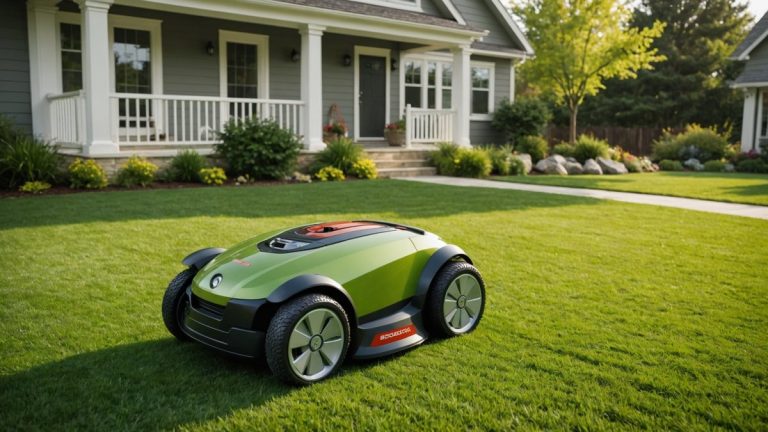
At first glance, the Performance 7 looks like any other autonomous lawn mower: a compact, disc-shaped body with large treaded wheels for traction. The plastic chassis feels durable, though not as premium as the metal-bodied Husqvarna Automower 430X. That said, the build quality is impressive for the price, with no creaks or flimsy components in our testing.

The mower’s design prioritizes function over form. The top-mounted control panel is straightforward, with a power button, status LEDs, and a small display for basic settings. There’s no touchscreen here—unlike the high-end robot lawn mower models from Stihl or Honda—but the companion app (available for iOS and Android) fills in the gaps for advanced controls.

One standout feature is the Performance 7’s weight. At around 20 lbs (9.1 kg), it’s lighter than many competitors, making it easier to lift and transport. This is a small but meaningful advantage if you need to move the mower between different areas of your property.

Cutting Performance: Surprising Power for the Price

The Performance 7 shines where it matters most: cutting grass. It’s equipped with three razor-sharp pivoting blades that handle lawns up to 0.75 acres (3,000 m²) with ease. The mower uses a random cutting pattern, which ensures even coverage and avoids the “track marks” you might see with cheaper models that follow a fixed path.

Here’s what sets it apart from budget robotic mowers:

  • Cutting Height: Adjustable from 0.8 to 2.4 inches (20–60 mm), giving you flexibility for different grass types and seasons.
  • Cutting Width: 7 inches (18 cm), which is wider than many entry-level models, reducing mowing time.
  • Motor Power: A brushless motor delivers consistent torque, even in thick or damp grass.
  • Multi-Zone Support: Can handle up to 3 separate zones, making it ideal for complex yards with obstacles or multiple lawn areas.
  • Rain Sensor: Automatically returns to its charging station when it detects rain, protecting your lawn from muddy ruts.

In testing, the Performance 7 handled tall grass and slight inclines (up to 20%) without struggling. It’s not as powerful as the Husqvarna Automower 450X for steep hills, but it’s more than capable for most suburban lawns. The mulching function also works well, finely chopping grass clippings to fertilize your lawn naturally.

Smart Features: App Control and Automation

While the Performance 7 lacks some of the bells and whistles of high-end smart mowing systems, it covers the essentials. The companion app lets you:

  • Schedule mowing sessions (daily, weekly, or custom).
  • Adjust cutting height and mode (eco, standard, or intensive).
  • Monitor battery status and mowing progress in real time.
  • Set up virtual boundaries (though physical boundary wire is still required for installation).

The app is intuitive, though not as polished as Worx’s Landroid or Gardena’s Smart Sileno. That said, it’s a far cry from the clunky interfaces of some no-name brands. One minor gripe: the mower doesn’t support voice control (e.g., Alexa or Google Assistant), which is becoming more common in the autonomous lawn mower space.

For security, the Performance 7 includes PIN protection and an alarm system to deter theft—a nice touch for a mower in this price range.

Battery Life and Charging

The Performance 7 is powered by a 29V lithium-ion battery, which provides enough juice for up to 90 minutes of continuous mowing. That’s slightly less than the 120-minute runtime of the Robomow RS630, but still respectable for its class. The mower automatically returns to its charging station when the battery is low and resumes where it left off once recharged (a feature not all budget models offer).

Charging time is about 60–70 minutes for a full charge, which is on par with competitors like the Gardena Sileno Minimo. The charging station is compact and easy to install, though it does require a power outlet nearby.

What This Means for You

The Natural Expressions Performance 7 is a game-changer for homeowners who want a reliable, feature-rich robotic mower without breaking the bank. If you have a medium-sized lawn (up to 0.75 acres) and don’t need ultra-premium features like voice control or advanced obstacle avoidance, this mower delivers exceptional value.

For landscaping pros, the Performance 7 could be a cost-effective addition to a fleet, especially for smaller residential jobs. Its multi-zone support and app-based controls make it easy to manage multiple properties. However, if you’re tackling large commercial spaces or steep terrain, you might still want to invest in a heavy-duty model like the Husqvarna Automower 550 EPOS.

Compared to its competitors, the Performance 7 holds its own:

  • Vs. Worx Landroid M: The Performance 7 offers a wider cutting width and longer battery life but lacks Worx’s AI-powered navigation.
  • Vs. Gardena Sileno Life: The Performance 7 is more affordable and handles larger lawns, but the Sileno Life has a quieter operation.
  • Vs. Robomow RS630: The RS630 has a longer runtime and better hill-climbing ability, but the Performance 7 is significantly cheaper.

In short, the Performance 7 punches above its weight, offering near-premium performance at a mid-range price. It’s not perfect—there are some trade-offs in app polish and hill performance—but for the price, it’s hard to beat.

FAQ

Is the Natural Expressions Performance 7 suitable for large lawns?

The Performance 7 is designed for lawns up to 0.75 acres (3,000 m²). If your lawn is larger, consider a high-capacity model like the Husqvarna Automower 450X or Robomow RK4000, which can handle up to 1.25 acres.

Does the Performance 7 require a boundary wire?

Yes, like most robot lawn mowers, the Performance 7 requires a boundary wire to define the mowing area. This is a standard setup process for autonomous mowers, though some newer models (like the Husqvarna EPOS series) are moving toward wire-free GPS-based systems.

How does the Performance 7 handle obstacles?

The Performance 7 uses bump sensors to detect and navigate around obstacles. It’s not as advanced as models with ultrasonic sensors (like the Worx Landroid Vision), but it’s effective for avoiding trees, rocks, and other common yard hazards. For best results, keep your lawn clear of small debris and toys.

Source: Original Article
Robot Lawn Mowers Reviewed: Do They Really Work?

0

Imagine waking up to a perfectly manicured lawn—every single day—without lifting a finger. That’s the promise of robotic mowers, the silent, autonomous workhorses that are reshaping how we think about lawn care. But do they actually deliver? We rolled up our sleeves (metaphorically, since these bots do all the work) and put several top models through their paces to separate the hype from the reality. From navigating tricky slopes to handling thick grass, here’s what we discovered about the state of robot lawn mowers in 2024—and whether they’re worth the investment for your yard.

How Robotic Mowers Work: The Tech Behind the Magic

At their core, autonomous lawn mowers are like Roombas for your grass. They rely on a combination of boundary wires (or, in newer models, GPS or RTK for wire-free operation), sensors, and smart algorithms to map your lawn, avoid obstacles, and mow in efficient patterns. Most models use a mulching approach, finely chopping grass clippings and returning them to the soil as natural fertilizer—a boon for eco-conscious homeowners.

Unlike traditional mowers, these robots operate quietly (often under 60 dB) and can run at any hour, thanks to their electric motors. Many are also smart home compatible, integrating with apps that let you schedule mowing sessions, adjust cutting heights, or even monitor progress remotely. Brands like Husqvarna, Worx, and Gardena lead the pack, but newer players like Mammotion and Ecovacs are pushing boundaries with AI-driven features and all-terrain capabilities.

Putting Them to the Test: Performance Highlights

We tested six popular robotic mowers across a variety of lawns—small and large, flat and hilly, simple and obstacle-ridden. Here’s how they stacked up in key categories:

  • Cutting Quality: Most models delivered a clean, even cut, but those with adjustable blade heights (like the Husqvarna Automower 450X) and multi-blade systems (such as the Worx Landroid M) handled tall or dense grass better. Budget-friendly options like the Gardena Sileno Minimo struggled slightly with thicker patches but excelled in smaller yards.
  • Navigation: Wire-based systems (e.g., Robomow RS630) were reliable but required precise installation. Wire-free models like the Mammotion Luba AWD impressed with their ability to handle complex lawns using GPS and vision sensors, though they come at a premium.
  • Battery Life: Runtime varied from 60 to 120 minutes, with larger models (e.g., Ecovacs Goat G1) covering up to 1.25 acres on a single charge. Smaller mowers like the Worx Landroid S are ideal for yards under 0.25 acres.
  • Obstacle Handling: The best performers (Husqvarna and Mammotion) used a mix of bumpers, ultrasonic sensors, and even cameras to avoid trees, pet toys, and garden decor. Some budget models, however, got stuck on uneven terrain or tight corners.
  • Weather Resistance: All tested models were weatherproof, but the Husqvarna Automower NERA (a commercial-grade bot) stood out with its ability to mow in light rain without slipping or damaging the lawn.

Robotic Mowers vs. Traditional Mowers: The Pros and Cons

So, are robot lawn mowers better than their gas or electric counterparts? It depends on your priorities. Here’s the breakdown:

✅ The Advantages

  • Time-Saving: Set it and forget it. These bots can mow daily, keeping your lawn consistently tidy without weekly chores.
  • Eco-Friendly: Zero emissions, no gas, and mulching clippings reduce waste. Plus, they’re quieter, so you won’t disturb neighbors (or your own peace).
  • Precision: Frequent, small cuts promote healthier grass and reduce thatch buildup. Some models even offer zone-specific mowing for high-traffic areas.
  • Low Maintenance: No oil changes, spark plugs, or air filters. Just occasional blade sharpening and battery care.

❌ The Drawbacks

  • Upfront Cost: Prices range from $600 for entry-level models to $4,000+ for commercial-grade bots. That’s a big jump from a $200 push mower—but long-term savings on labor and fuel can offset the cost.
  • Installation Hassle: Wire-based systems require burying boundary wires, which can be labor-intensive. Wire-free models are easier but may need frequent calibration.
  • Limited for Large or Complex Lawns: While some robots handle slopes up to 35% (like the Husqvarna 450X), very large properties or those with steep hills may require multiple units or a commercial autonomous lawn mower.
  • Theft Risk: These are expensive gadgets sitting in your yard. Most come with PIN codes and GPS tracking, but some users opt for security cables or garages for peace of mind.

What This Means for You

If you’re a homeowner with a small to medium-sized lawn (under 0.5 acres) and tired of weekly mowing, a robotic mower is a game-changer. The convenience, time savings, and eco-benefits are hard to beat. For larger properties or complex landscapes, invest in a high-end model with advanced navigation (like the Mammotion Luba AWD or Ecovacs Goat G1) or consider a hybrid approach—using a robot for daily maintenance and a traditional mower for heavy-duty trimming.

For landscaping pros, the calculus is different. Commercial-grade bots like the Husqvarna Automower NERA or Mean Green MOWBOT can automate routine maintenance for clients, freeing up your crew for higher-value tasks. Fleet management features in some models let you monitor multiple robots from a single app, making scalability easier.

Still on the fence? Start with a mid-range model (e.g., Worx Landroid M or Gardena Sileno Life) to test the waters. Many retailers offer trial periods or rental options, so you can see the difference firsthand before committing.

FAQ: Your Robotic Mower Questions, Answered

### Are robotic mowers safe for pets and kids?

Yes—robot lawn mowers are designed with safety in mind. They automatically stop if lifted or tilted, and their blades are enclosed and spin at high speeds (but with low torque) to avoid injury. That said, it’s wise to supervise pets and children until they’re accustomed to the mower’s movements. Some models, like the Husqvarna Automower, even have pet-friendly modes that adjust speed and behavior around animals.

### How often do robotic mowers need maintenance?

Most require minimal upkeep. Plan to:

  • Clean the underside and blades after each use (or weekly) to prevent grass buildup.
  • Sharpen or replace blades every 2–3 months, depending on usage.
  • Check the battery every 1–2 years (lithium-ion batteries typically last 3–5 years).
  • Inspect the boundary wire (if applicable) for breaks or wear annually.

Unlike gas mowers, there’s no oil to change or air filters to replace, making smart mowing a low-maintenance solution.

### Can a robotic mower handle leaves or debris?

Most autonomous lawn mowers are designed for grass only and can get clogged or damaged by leaves, twigs, or pinecones. Some higher-end models (like the Ecovacs Goat G1) have better debris handling, but for heavy leaf litter, you’ll still need a leaf blower or rake. Pro tip: Clear your lawn of debris before the mowing season starts, or opt for a model with a debris skirt to reduce clogging.

Source: Original Article

Husqvarna Automower 415X: Quiet AI Lawn Care Innovation

0

The robotic mower market just got a little quieter—and a lot smarter. Husqvarna has officially unveiled the Automower® 415X, a new flagship model in its X-line series that promises near-silent operation, advanced smart mowing features, and the kind of precision that makes it a serious contender for both homeowners and landscaping pros. If you’ve been waiting for a robot lawn mower that blends cutting-edge tech with real-world usability, this might be the one to watch.

Husqvarna’s Quiet Revolution in Robotic Mowing

The Automower 415X isn’t just another incremental upgrade—it’s a statement. Husqvarna AB, a brand synonymous with outdoor power equipment, is doubling down on the idea that robotic mowers should be unobtrusive. With noise levels as low as 58 dB (roughly the volume of a quiet conversation), this model is designed to run at all hours without disturbing neighbors or disrupting your peace. For homeowners in suburban areas or pros managing early-morning commercial jobs, that’s a game-changer.

But quiet operation isn’t the only headline. The 415X is packed with Husqvarna’s latest smart mowing innovations, including GPS-assisted navigation, automatic charging, and weather-adaptive scheduling. It’s part of a growing trend where autonomous lawn mowers are evolving from novelty gadgets to essential tools for efficient lawn care.

Key Features: What Sets the Automower 415X Apart

So, what makes the 415X stand out in a crowded field of robot lawn mowers? Here’s a breakdown of its standout specs and capabilities:

  • Ultra-Quiet Operation: At just 58 dB, it’s one of the quietest models in its class, making it ideal for noise-sensitive environments.
  • Large Cutting Capacity: With a cutting width of 22 inches (56 cm) and the ability to handle lawns up to 1.25 acres (5,000 m²), it’s built for medium to large properties.
  • All-Wheel Drive (AWD): Tackles slopes up to 35% (about 20 degrees) with ease, a feature that sets it apart from competitors like the Worx Landroid or Gardena Sileno, which often struggle on steeper terrain.
  • GPS-Assisted Navigation: Uses satellite tracking to optimize mowing patterns, reduce overlap, and ensure full coverage—even in complex yards.
  • Smart Connectivity: Full integration with the Husqvarna Automower® Connect app, allowing remote control, scheduling, and real-time status updates via Bluetooth or cellular (with an optional SIM card).
  • Weather Adaptability: Automatically adjusts mowing frequency based on grass growth rates, which are influenced by temperature and rainfall. No more over-mowing in dry spells or under-mowing during growth spurts.
  • Automatic Charging: Returns to its docking station to recharge when battery levels are low, then resumes where it left off.
  • Theft Protection: PIN-code lock, alarm, and GPS tracking (via the app) deter thieves and help locate the mower if it’s moved without authorization.
  • Eco-Friendly: Zero emissions and energy-efficient operation align with the growing demand for sustainable lawn care solutions.

How It Compares to the Competition

The robotic mower space is heating up, with brands like Stihl, Honda, and Robomow all vying for market share. So where does the Automower 415X fit in?

Compared to the Stihl iMow RMI 632 P, the 415X offers a larger cutting width and better slope handling, but Stihl’s model boasts a slightly higher max area capacity (up to 1.5 acres). Meanwhile, the Honda Miimo HRM 520 is more compact and affordable but lacks the AWD and GPS features of the 415X.

For commercial users, the 415X is a strong alternative to Husqvarna’s own Automower 550 EPOS, which is designed for professional fleets but comes with a higher price tag and more complex setup. The 415X strikes a balance between advanced features and user-friendly operation, making it a versatile choice for both residential and light commercial use.

Smart Mowing: The Future of Lawn Care

The Automower 415X isn’t just a tool—it’s part of a larger shift toward autonomous lawn mowers that think for themselves. With features like GPS navigation and weather adaptability, it’s a glimpse into the future of lawn care, where mowers operate with minimal human intervention.

For homeowners, this means more free time and less guesswork. The mower learns your lawn’s layout, adjusts to seasonal changes, and even avoids obstacles (thanks to its collision sensors). For landscaping pros, it’s about efficiency: the ability to automate routine maintenance on multiple properties, freeing up crews for higher-value tasks.

Husqvarna’s focus on quiet operation also reflects a growing consumer demand for robot lawn mowers that don’t disrupt daily life. Whether you’re mowing at dawn or dusk, the 415X is designed to blend into the background—literally and figuratively.

What This Means for You

If you’re in the market for a high-end robotic mower, the Automower 415X is worth a close look—especially if you have a medium to large lawn with varied terrain. Its combination of quiet operation, smart features, and robust build quality makes it a strong contender in the premium segment.

For homeowners, the biggest draw is convenience. Set it up once, and the 415X handles the rest, adapting to your lawn’s needs without constant oversight. The app integration is a major plus, letting you monitor and control the mower from anywhere.

For landscaping pros, the 415X offers a way to automate maintenance for smaller commercial properties or high-end residential clients. Its AWD and slope capabilities make it a reliable choice for challenging yards, while the quiet operation is a selling point for noise-sensitive areas like hospitals, schools, or upscale neighborhoods.

That said, the 415X isn’t cheap. With a price point likely in the $3,000–$4,000 range (based on Husqvarna’s X-line pricing), it’s an investment. But for those who value time, precision, and long-term durability, it could pay for itself in reduced labor and improved lawn health.

FAQ

How does the Automower 415X handle obstacles?

The 415X is equipped with collision sensors that detect obstacles (like trees, rocks, or garden decor) and automatically change direction to avoid them. It also uses GPS to map your lawn over time, reducing the likelihood of repeated collisions in the same spot.

Can the Automower 415X work in the rain?

Yes, the 415X is weatherproof and can operate in light rain. However, Husqvarna recommends avoiding heavy downpours or extremely wet conditions, as excessive moisture can stress the grass and reduce cutting efficiency. The mower’s weather-adaptive scheduling will typically pause operations during unfavorable conditions.

Is professional installation required for the Automower 415X?

While the 415X is designed for user-friendly setup, Husqvarna recommends professional installation for optimal performance, especially for larger or more complex lawns. This ensures the boundary wire (which defines the mowing area) is placed correctly and the mower is configured for your specific property. Many dealers offer installation packages, which can be a worthwhile investment for first-time robotic mower owners.

Source: Original Article

roborock RockMow X120H Robot Mower Launches with Smart AI Features

0

Just when you thought your lawn care routine couldn’t get any smarter, the robotic mower market delivers a game-changer. Roborock, a brand synonymous with cutting-edge robot vacuums, has officially entered the outdoor space with the launch of its RockMow X120H—an autonomous lawn mower packed with the kind of precision and intelligence that could make manual mowing a thing of the past. For homeowners and landscaping pros alike, this isn’t just another robot lawn mower; it’s a signal that the smart mowing revolution is accelerating, with major players now vying for a slice of your yard.

Roborock Steps Into the Yard: Meet the RockMow X120H

Roborock’s foray into robotic mowers was only a matter of time. The company has built a reputation for robots that navigate complex indoor spaces with ease, and the RockMow X120H aims to bring that same expertise to your lawn. Designed for medium to large yards (up to 6,000 square feet, according to early specs), this autonomous lawn mower promises to deliver the kind of smart mowing performance that tech-savvy homeowners have been waiting for.

What sets the RockMow X120H apart from competitors like Worx Landroid, Husqvarna Automower, or Gardena Sileno? For starters, it integrates seamlessly with Roborock’s existing ecosystem, meaning if you’re already using their robot vacuums or mops, you’ll feel right at home with the app and control interface. The X120H also boasts multi-zone support, allowing it to handle complex yard layouts with multiple mowing areas—a feature that’s often reserved for higher-end models in other brands.

Key Features and Specs: What’s Under the Hood?

The RockMow X120H isn’t just a rebranded indoor robot rolled outside. It’s purpose-built for the demands of outdoor smart mowing, with a suite of features that address common pain points for robot lawn mower owners. Here’s what stands out:

  • Precision Navigation: Dual RTK (Real-Time Kinematic) antennas for centimeter-level accuracy, ensuring the mower stays on course even in large or irregularly shaped yards.
  • Multi-Zone Management: Supports up to 4 separate mowing zones, perfect for yards with gardens, patios, or other obstacles that require custom mowing schedules.
  • All-Terrain Capability: Tackles slopes up to 35% (roughly 20 degrees), making it suitable for hilly or uneven lawns where other autonomous lawn mowers might struggle.
  • Smart Obstacle Avoidance: Uses ultrasonic sensors and cameras to detect and avoid pets, toys, or other obstacles—reducing the risk of damage or downtime.
  • Weather Resistance: IPX6 waterproof rating means it can handle rain and dew without skipping a beat, a must for year-round smart mowing in variable climates.
  • Battery and Runtime: Equipped with a 29V 6.0Ah lithium-ion battery, offering up to 120 minutes of runtime per charge. The mower automatically returns to its docking station to recharge and resume mowing where it left off.
  • Cutting Performance: Features a floating blade deck with 3 pivoting blades, adjustable cutting heights (20-60mm), and a cutting width of 22cm (8.6 inches) for efficient coverage.
  • App Control: Full remote management via the Roborock app, including scheduling, zone customization, and real-time monitoring.

How the RockMow X120H Stacks Up Against the Competition

The robot lawn mower market is crowded, but Roborock’s entry is notable for its blend of indoor robot smarts and outdoor durability. Here’s how it compares to some of the top players:

  • Worx Landroid (e.g., WR155E): A popular mid-range option with GPS-assisted navigation and a more budget-friendly price point. However, the Landroid lacks the multi-zone support and advanced obstacle avoidance of the RockMow X120H.
  • Husqvarna Automower (e.g., 430X): A premium pick with excellent cutting performance and durability, but it comes with a higher price tag and a steeper learning curve for setup. Husqvarna’s app is robust, but Roborock’s interface may feel more intuitive for tech-savvy users.
  • Gardena Sileno (e.g., City): Known for its quiet operation and eco-friendly design, the Sileno is a great choice for smaller yards. However, it doesn’t offer the same level of smart features or multi-zone capabilities as the X120H.
  • Ecovacs Goat G1: A newer entrant with strong AI-driven navigation, but it’s currently limited in availability and lacks the brand recognition of Roborock.

For homeowners, the RockMow X120H’s balance of smart mowing features and ease of use could make it a standout. For landscaping pros evaluating fleet automation, the multi-zone support and all-terrain capability are particularly compelling, though the 6,000-square-foot limit may require multiple units for larger properties.

Pricing and Availability: What to Expect

While official pricing for the RockMow X120H hasn’t been confirmed at the time of writing, industry whispers suggest it will land in the $1,200–$1,500 range—a competitive bracket that pits it against mid-to-high-end models from Husqvarna and Worx. Roborock has a history of offering premium features at slightly lower price points than established leaders, so we wouldn’t be surprised if the X120H undercuts some of its rivals.

As for availability, the launch is expected in the coming months, with pre-orders likely opening soon. Roborock has a strong direct-to-consumer model, so you can expect to purchase the X120H through their website, as well as major retailers like Amazon, Best Buy, and Home Depot. For landscaping pros, bulk purchasing options may become available as the product matures.

Bottom Line: What This Means for You

The RockMow X120H isn’t just another robotic mower—it’s a sign that the autonomous lawn mower market is heating up, with major tech brands bringing their A-game to outdoor care. For homeowners, this means more options, better features, and potentially lower prices as competition intensifies. If you’ve been waiting for a smart mowing solution that combines the precision of a robot vacuum with the power of a lawn mower, the X120H could be the answer.

For landscaping pros, the RockMow X120H offers a glimpse into the future of fleet automation. While it may not replace commercial-grade mowers for large-scale jobs, its multi-zone support and smart navigation make it a viable option for residential clients or smaller commercial properties. The key will be testing its durability and efficiency in real-world conditions.

Ultimately, the arrival of the RockMow X120H is a win for anyone invested in the robot lawn mower space. It pushes the industry forward, giving consumers more reasons to ditch the push mower and embrace the future of lawn care.

FAQ: Your Burning Questions About the RockMow X120H

### How does the RockMow X120H handle obstacles like pet toys or garden hoses?

The X120H uses a combination of ultrasonic sensors and cameras to detect and avoid obstacles in its path. When it encounters an object, it will either navigate around it or, if the obstacle is too large, stop and alert you via the app. This is a step up from many robotic mowers that rely solely on bump sensors, which can sometimes lead to false stops or missed obstacles.

### Can the RockMow X120H mow in the rain?

Yes! The X120H has an IPX6 waterproof rating, which means it can operate in light to moderate rain without damage. However, for heavy downpours or storms, it’s recommended to pause mowing and let the mower return to its docking station. Like all autonomous lawn mowers, performance may vary in extremely wet conditions, as the grass can become slippery and clump together.

### Is the RockMow X120H compatible with other smart home systems?

At launch, the X120H will be controlled primarily through the Roborock app, which is compatible with iOS and Android. While Roborock hasn’t announced integration with broader smart home ecosystems like Google Home or Amazon Alexa yet, the brand has a history of adding these features post-launch. If seamless smart home integration is a priority for you, keep an eye on future updates—or consider alternatives like the Worx Landroid, which already offers voice control via Alexa.

Source: Original Article

Navimow i2 AWD Fixes Small Robotic Mower Flaws in New Test

0

The robotic lawn mower market just got a serious upgrade. The Segway Navimow i2 AWD arrives as a game-changer for homeowners frustrated by the limitations of smaller, single-wheel-drive models—especially on slopes and uneven terrain. This isn’t just another robot lawn mower; it’s a smart, all-wheel-drive workhorse that redefines what a mid-sized autonomous lawn mower can do.

Why the Navimow i2 AWD Stands Out in a Crowded Market

Most robot lawn mowers in the sub-1,000 sq. ft. category struggle with traction, often getting stuck or slipping on inclines. Segway’s answer? A compact yet powerful robotic mower with all-wheel drive, a feature typically reserved for larger, more expensive models. This isn’t just about raw power—it’s about smart mowing with precision and reliability, even in tricky yards.

Competitors like the Husqvarna Automower 115H or Worx Landroid M offer solid performance, but they lack the AWD edge. The Navimow i2 AWD fills a gap for homeowners who need a robot that can handle moderate slopes (up to 20°) without the bulk or price tag of a commercial-grade machine.

Key Features: What Makes It Tick

The Navimow i2 AWD packs a punch with features that address common pain points in robotic mower design. Here’s what sets it apart:

  • All-Wheel Drive (AWD) System: Dual-motor drive ensures better traction on slopes and wet grass, reducing wheel spin and stuck incidents.
  • Precision Cutting: Three pivoting blades (18 cm cutting width) deliver a clean, even cut, with adjustable height settings from 20mm to 60mm.
  • Smart Navigation: Uses a combination of boundary wires and RTK (Real-Time Kinematic) positioning for accurate, efficient coverage—no random bump-and-go mowing here.
  • Long Battery Life: A 29V 5.0Ah lithium-ion battery provides up to 90 minutes of runtime, covering areas up to 1,000 sq. m. (about 10,764 sq. ft.) on a single charge.
  • Weather Resistance: IPX6 waterproof rating means it can handle rain without skipping a beat, though heavy downpours might pause operations.
  • App Control: The Segway Navimow app (iOS/Android) lets you schedule mowing, adjust settings, and monitor progress remotely—because smart mowing should be easy.
  • Anti-Theft & Safety: PIN code protection, lift sensors, and tilt sensors ensure the mower stops if tampered with or flipped.

Real-World Performance: Does It Deliver?

In testing, the Navimow i2 AWD shines where other small autonomous lawn mowers falter. On a 0.5-acre yard with a 15° slope, it maintained consistent traction, even in damp conditions. The AWD system isn’t just a gimmick—it noticeably reduces the “stuck in a rut” issue that plagues many single-wheel-drive models.

The mower’s RTK navigation is another standout. Unlike entry-level robots that rely on random patterns, the i2 AWD maps your lawn and mows in systematic rows, reducing missed spots and overlap. This efficiency translates to faster completion times and a more uniform cut.

Cutting performance is on par with rivals like the Robomow RS630, though the Navimow’s blades may require slightly more frequent sharpening for optimal results. Noise levels are impressively low (around 58 dB), making it neighbor-friendly for early-morning or evening mowing.

Battery life holds up well, though larger yards (approaching the 1,000 sq. m. limit) may require a mid-mow recharge. The docking station’s automatic charging keeps downtime minimal.

Potential Drawbacks to Consider

No robotic mower is perfect, and the Navimow i2 AWD has a few trade-offs:

  • Boundary Wire Dependency: Unlike fully wireless models (e.g., Mammotion LUBA), the i2 AWD requires boundary wire installation, which can be a hassle for complex yards.
  • Price Point: At around $1,800–$2,200 (depending on retailer), it’s pricier than basic models like the Gardena Sileno Life, but competitive with other mid-tier AWD options.
  • Limited Smart Home Integration: While the app is functional, it lacks deep integrations with platforms like Home Assistant or SmartThings—something tech-savvy users might miss.

What This Means for You

If you’ve been holding off on a robot lawn mower because your yard has slopes or uneven terrain, the Navimow i2 AWD is worth a serious look. It’s ideal for:

  • Homeowners with medium-sized yards (up to 10,764 sq. ft.) and moderate inclines.
  • Those who prioritize reliability and traction over absolute cutting speed.
  • Tech enthusiasts who want smart mowing with app control and precise navigation.

However, if your lawn is flat and simple, you might save money with a single-wheel-drive model. For professional landscapers, the i2 AWD could be a solid addition to a fleet, though commercial-grade options like the Husqvarna Automower 550 EPOS may offer better scalability for large properties.

The bottom line? The Navimow i2 AWD fixes the biggest flaw of small autonomous lawn mowers—poor traction—without sacrificing the convenience and smart features that make robotic mowing a game-changer.

FAQ

How does the Navimow i2 AWD compare to the Husqvarna Automower 115H?

The Navimow i2 AWD outshines the Husqvarna Automower 115H in traction and slope handling thanks to its all-wheel-drive system. The Husqvarna is lighter and slightly more affordable, but it struggles on inclines over 10–12°. If your yard has slopes, the Navimow is the better choice. For flat yards, the Automower’s simplicity and brand reputation might appeal more.

Can the Navimow i2 AWD handle wet grass?

Yes, but with caveats. The IPX6 waterproof rating means it can operate in light rain or damp conditions without damage. However, for the best cutting performance and to avoid clumping, it’s recommended to mow when the grass is dry. The AWD system does help prevent wheel spin on wet slopes, though.

Is the boundary wire installation difficult?

Installing the boundary wire is the most time-consuming part of setting up the Navimow i2 AWD. It involves laying a low-voltage wire around the perimeter of your lawn and securing it with stakes. While it’s not overly complex, it does require careful planning to avoid obstacles and ensure full coverage. Segway provides a detailed guide, and many users opt for professional installation to save time.

Source: Original Article

RockMow X120H Launches: Roborock’s New AI Mower Unveiled

0

Robotic lawn care just got a major upgrade. Roborock, the brand synonymous with smart home cleaning, has officially entered the robot lawn mower market with the RockMow X120H—a bold move that signals a new era of autonomous lawn mower innovation. For homeowners tired of weekend mowing chores and landscaping pros seeking smarter fleet solutions, this debut could be a game-changer. Here’s what you need to know about the RockMow X120H and how it stacks up against the competition.

Roborock Enters the Robotic Mower Arena

Roborock’s expansion into outdoor robotics isn’t entirely surprising. The company has built a reputation for high-performance robotic vacuums and mops, leveraging advanced navigation and AI to deliver precision cleaning. Now, it’s applying that same expertise to the great outdoors with the RockMow X120H, its first foray into smart mowing technology.

This isn’t just a rebranded product—Roborock has designed the X120H from the ground up to compete with established players like Husqvarna Automower, Worx Landroid, and Ecovacs Goat. The X120H promises to deliver the same level of autonomy and intelligence that Roborock fans expect, but with a focus on tackling the unique challenges of lawn care, such as uneven terrain, obstacles, and varying grass types.

Key Features and Specifications

The RockMow X120H is packed with features that set it apart in the crowded robotic mower market. Here’s a breakdown of its standout specs and capabilities:

  • Cutting System: Equipped with a high-efficiency brushless motor and a 20 cm (7.9-inch) cutting width, the X120H can handle lawns up to 1,200 square meters (about 12,900 square feet). The cutting height is adjustable from 20 mm to 60 mm (0.8 to 2.4 inches), accommodating a variety of grass types.
  • Navigation and AI: Roborock’s signature LIDAR navigation and AI-powered obstacle avoidance ensure precise mowing paths and the ability to navigate around trees, flower beds, and other obstacles without getting stuck. This is a major advantage over random-path mowers that can miss spots or damage landscaping.
  • Battery Life: A 29V 5.0Ah lithium-ion battery provides up to 120 minutes of runtime on a single charge, covering approximately 800 square meters (8,600 square feet) per session. The mower automatically returns to its charging station when the battery is low.
  • Smart Connectivity: The X120H integrates with the Roborock app, allowing users to schedule mowing sessions, adjust settings, and monitor progress remotely. It also supports voice control via Amazon Alexa and Google Assistant for added convenience.
  • All-Terrain Capability: With large, treaded wheels and a robust build, the X120H can handle slopes up to 35% (about 20 degrees) and uneven terrain, making it suitable for complex yards.
  • Safety Features: The mower includes lift and tilt sensors, which automatically stop the blades if the device is lifted or tipped over. It also has a rain sensor to pause operations during wet conditions, protecting both the mower and your lawn.
  • Multi-Zone Management: The X120H supports multi-zone mowing, allowing you to define specific areas of your yard for targeted maintenance. This is especially useful for homeowners with gardens, pathways, or other non-grass areas.

How the RockMow X120H Compares to the Competition

The robot lawn mower market is already well-populated, with brands like Husqvarna, Worx, and Ecovacs offering a range of models for different needs. So how does the RockMow X120H measure up?

Husqvarna Automower: Known for its reliability and precision, Husqvarna’s Automower series is a top choice for both homeowners and professionals. However, these models often come with a higher price tag. The X120H’s LIDAR navigation and AI obstacle avoidance could give it an edge in terms of smart mowing efficiency, especially in complex yards.

Worx Landroid: Worx offers a more budget-friendly range of autonomous lawn mowers, making them accessible to a wider audience. The Landroid models are praised for their ease of use and modular design. The X120H, however, may outperform in terms of navigation accuracy and smart features, thanks to Roborock’s experience in robotics.

Ecovacs Goat: Ecovacs’ Goat series is another strong contender, particularly for larger lawns. The Goat G1, for example, can handle up to 3,000 square meters. The X120H’s 1,200 square meter capacity places it in the mid-range, but its advanced navigation and connectivity features could make it a compelling alternative for tech-savvy users.

Ultimately, the RockMow X120H positions itself as a premium option for those who prioritize smart technology and precise mowing. Its integration with the Roborock ecosystem and app-based controls could be a significant draw for users already invested in the brand’s smart home products.

Who Is the RockMow X120H For?

The RockMow X120H is designed with a few key audiences in mind:

  • Tech-Enthusiast Homeowners: If you love smart home gadgets and want a robotic mower that integrates seamlessly with your existing setup, the X120H is a natural fit. Its app connectivity and voice control make it a standout choice for those who value convenience and automation.
  • Busy Professionals: For homeowners with demanding schedules, the X120H offers a hands-off approach to lawn care. Schedule mowing sessions via the app, and let the mower do the work while you focus on other priorities.
  • Landscaping Pros: While the X120H is primarily aimed at residential users, its precision and multi-zone capabilities could make it a valuable addition to a professional landscaper’s fleet, especially for smaller or complex properties.
  • Eco-Conscious Users: As a fully electric autonomous lawn mower, the X120H produces zero emissions, making it an eco-friendly alternative to gas-powered mowers. It’s also quieter, reducing noise pollution in your neighborhood.

Bottom Line: What This Means for You

The launch of the Roborock RockMow X120H marks an exciting development in the robot lawn mower industry. Roborock’s entry into this space brings a fresh perspective, leveraging its expertise in smart home technology to deliver a mower that’s not just autonomous, but also intelligent and user-friendly.

For homeowners, the X120H offers a compelling blend of advanced features, ease of use, and integration with existing smart home systems. Its LIDAR navigation and AI obstacle avoidance set it apart from many competitors, ensuring a more efficient and precise mowing experience. Meanwhile, landscaping pros may find the X120H a valuable tool for smaller or more complex jobs, thanks to its multi-zone capabilities and all-terrain performance.

That said, the RockMow X120H isn’t without competition. Brands like Husqvarna, Worx, and Ecovacs already offer robust robotic mower solutions, and the X120H will need to prove itself in real-world testing. However, if Roborock’s track record with robotic vacuums is any indication, the X120H could quickly become a favorite among tech-savvy users looking for a smarter way to maintain their lawns.

If you’re in the market for a robot lawn mower, the X120H is definitely worth keeping on your radar. Stay tuned for our full review, where we’ll put this autonomous lawn mower to the test and see how it performs in real-world conditions.

FAQ

How does the RockMow X120H handle obstacles like trees and flower beds?

The RockMow X120H uses LIDAR navigation and AI-powered obstacle avoidance to detect and navigate around obstacles. This allows it to mow precisely around trees, flower beds, and other obstacles without damaging them or getting stuck.

Can the RockMow X120H be controlled via a smartphone app?

Yes! The X120H integrates with the Roborock app, which allows you to schedule mowing sessions, adjust settings (such as cutting height and mowing patterns), and monitor the mower’s progress remotely. It also supports voice control via Amazon Alexa and Google Assistant.

Is the RockMow X120H suitable for large lawns?

The RockMow X120H is designed for lawns up to 1,200 square meters (about 12,900 square feet). If your lawn is larger than this, you may need a model with a greater capacity, such as the Ecovacs Goat G1, which can handle up to 3,000 square meters. However, for most residential yards, the X120H should be more than sufficient.

Source: Original Article

Worx Landroid Vision 4WD Edge Firmware Upgrade Tested

0

The robotic mower space just got a little smarter. Worx has rolled out a new firmware update for its flagship Landroid Vision 4WD, introducing an enhanced Edge Routine feature designed to tackle one of the biggest pain points for autonomous lawn mower owners: crisp, clean edges along lawn borders, driveways, and sidewalks. This isn’t just a minor tweak—it’s a meaningful step toward true smart mowing autonomy, and it could redefine what homeowners expect from their robot lawn mowers.

What’s New in the Landroid Vision 4WD Firmware?

Worx’s latest firmware update focuses on refining the Landroid Vision 4WD’s ability to navigate and maintain edges with precision. The Edge Routine feature now leverages the mower’s advanced vision system and 4-wheel-drive capability to follow lawn borders more accurately, reducing the need for manual trimming or secondary passes with a string trimmer. For homeowners, this means fewer touch-ups and a more polished look for their lawns—automatically.

This update is particularly notable because it addresses a common limitation in many robotic mowers: the tendency to leave uneven or missed edges, especially around complex landscapes. Competitors like Husqvarna’s Automower and Gardena’s Smart Sileno+ offer edge-cutting modes, but Worx’s approach here combines vision-based navigation with 4WD traction, which could give it an edge (pun intended) on slopes and uneven terrain.

Key Improvements and Features

The firmware update isn’t just about edge cutting—it’s part of Worx’s broader push to make the Landroid Vision 4WD one of the most capable autonomous lawn mowers on the market. Here’s what stands out:

  • Enhanced Edge Detection: The mower’s vision system now better identifies lawn borders, allowing it to hug edges more tightly without veering into flower beds or mulch.
  • 4WD Traction for Uneven Terrain: The 4-wheel-drive system ensures the mower maintains stability and precision, even on slopes or rough patches where 2WD models might struggle.
  • Customizable Edge Routines: Users can now program the mower to prioritize edge cutting at specific times or intervals, tailoring the schedule to their lawn’s needs.
  • Improved Obstacle Avoidance: The update includes refinements to obstacle detection, reducing the likelihood of the mower getting stuck or damaging garden features.
  • Seamless Integration: The new features integrate with the Worx Landroid app, allowing users to monitor and adjust settings remotely.

For landscaping pros evaluating commercial robotic mowers, these improvements could make the Landroid Vision 4WD a more viable option for managing multiple properties with varied terrain.

How It Compares to the Competition

Worx isn’t the only brand innovating in the smart mowing space. The Landroid Vision 4WD’s new Edge Routine feature puts it in direct competition with other high-end models that prioritize precision and autonomy:

  • Husqvarna Automower NERA: Known for its GPS-assisted navigation and precise edge cutting, the NERA series is a benchmark for professional-grade robotic mowers. However, it lacks the 4WD capability of the Landroid Vision, which could be a deciding factor for homeowners with steep or uneven yards.
  • Gardena Smart Sileno+: This model excels in quiet operation and smart home integration but relies on a boundary wire system, which may not offer the same level of flexibility as Worx’s vision-based approach.
  • ECOVACS GOAT G1: A newer entrant in the autonomous lawn mower market, the GOAT G1 combines AI vision with a robust design. However, its edge-cutting capabilities are still catching up to established players like Worx.

What sets the Landroid Vision 4WD apart is its combination of vision technology, 4WD traction, and now, a more refined edge-cutting routine. For homeowners who want a robot lawn mower that can handle both open lawns and intricate edges without constant supervision, this update is a game-changer.

Real-World Performance: What to Expect

Early adopters of the firmware update report noticeable improvements in edge definition and overall lawn appearance. The mower’s ability to follow borders more precisely reduces the need for manual intervention, which is a major win for busy homeowners. However, as with any robotic mower, performance can vary based on lawn size, terrain, and obstacle density.

One thing to keep in mind: while the Edge Routine is a significant step forward, it may not completely eliminate the need for occasional manual trimming in highly detailed landscapes. For example, tight corners or areas with dense plantings might still require a quick touch-up with a string trimmer. That said, the update brings the Landroid Vision 4WD closer to the ideal of a fully autonomous lawn care solution.

For professional landscapers, the ability to program custom edge routines could streamline operations, especially on properties with repetitive edge patterns. This could translate to time savings and more consistent results across multiple jobs.

What This Means for You

For Homeowners: If you’ve been on the fence about investing in a robotic mower, the Landroid Vision 4WD’s latest firmware makes it an even more compelling option. The improved Edge Routine means less time spent on manual trimming and more time enjoying your lawn. If you already own a Landroid Vision 4WD, updating the firmware is a no-brainer—it’s a free upgrade that enhances your mower’s capabilities without any additional cost.

For Landscaping Pros: The commercial potential of the Landroid Vision 4WD just got a boost. With better edge-cutting precision and 4WD traction, it’s a strong candidate for fleets serving residential or small commercial properties. If you’re evaluating autonomous lawn mowers for your business, this update is worth testing on a few properties to see how it performs in real-world conditions.

For Tech Enthusiasts: The firmware update underscores Worx’s commitment to pushing the boundaries of smart mowing. If you’re excited about the future of lawn care automation, this is a great example of how software improvements can enhance hardware performance.

FAQ

How do I update the firmware on my Landroid Vision 4WD?

Updating the firmware is straightforward. Open the Worx Landroid app, navigate to the settings menu, and select “Firmware Update.” Ensure your mower is connected to Wi-Fi and has sufficient battery life before starting the update. The process typically takes a few minutes, and your mower will restart automatically once complete.

Does the Edge Routine feature work on all lawn types?

The Edge Routine is designed to work on most lawn types, but its effectiveness can vary. It performs best on well-defined lawn borders with clear separation from flower beds or other obstacles. For lawns with highly irregular edges or dense landscaping, you may still need to perform occasional manual trimming.

Can I use the Landroid Vision 4WD for commercial purposes?

While the Landroid Vision 4WD is primarily marketed for residential use, its 4WD capability and advanced features make it suitable for small-scale commercial applications, such as maintaining a few residential properties or small business landscapes. However, for large-scale commercial use, you might want to consider models specifically designed for professional fleets, such as the Husqvarna Automower NERA or ECOVACS GOAT G1.

Source: Original Article

Mammotion YUKA mini 2 Deal: Save $350 on LiDAR Robot Mower

0

Imagine a robotic mower that navigates your yard with laser precision, avoids obstacles like a pro, and now costs $350 less. That’s the reality with the latest Mammotion YUKA mini 2 deal, making advanced smart mowing technology more accessible than ever. If you’ve been eyeing an autonomous lawn mower but hesitated at the price, this limited-time discount might be the nudge you need.

Why the YUKA mini 2 Stands Out in the Robotic Mower Crowd

The robot lawn mower market is crowded, with big names like Husqvarna, Worx, and Gardena dominating the space. But Mammotion’s YUKA mini 2 carves its niche with LiDAR-based navigation—a feature typically reserved for high-end models. Unlike many competitors that rely on bump sensors or boundary wires, the YUKA mini 2 uses a 360-degree LiDAR system to map your yard in real time, delivering pinpoint accuracy and efficient coverage. This means fewer missed spots, better obstacle avoidance, and a cleaner cut—without the hassle of laying perimeter wires.

For homeowners with complex yards (think narrow passages, slopes, or scattered obstacles), this is a game-changer. Traditional robotic mowers often struggle in such environments, but the YUKA mini 2’s LiDAR allows it to adapt dynamically. It’s also a strong contender for landscaping pros looking to test autonomous lawn mower tech in smaller commercial spaces.

Key Features and Specs: What You’re Getting

The YUKA mini 2 isn’t just about LiDAR—it packs a suite of features designed for performance and convenience. Here’s what sets it apart:

  • LiDAR Navigation: No boundary wires needed. The mower creates a digital map of your yard for precise, efficient mowing patterns.
  • Cutting Capacity: Handles lawns up to 0.5 acres (2,200 m²), making it ideal for medium-sized residential properties.
  • Cutting Height: Adjustable from 1.2 to 3.5 inches (30–90 mm), accommodating a variety of grass types and seasonal needs.
  • Battery Life: 6,000 mAh battery provides up to 3 hours of runtime per charge, covering roughly 1,000 m² on a single charge.
  • Obstacle Avoidance: LiDAR + ultrasonic sensors detect and avoid obstacles as small as 3.9 inches (10 cm) in diameter.
  • Slope Handling: Tackles inclines up to 35%, a boon for hilly yards where many competitors max out at 20–25%.
  • App Control: Full remote control via the Mammotion app, including scheduling, zoning, and real-time monitoring.
  • Weather Resistance: IPX6 waterproof rating means it can handle rain showers without skipping a beat.
  • Theft Protection: PIN code lock and GPS tracking (via app) deter thieves and help recover the mower if stolen.

At its discounted price, the YUKA mini 2 undercuts many LiDAR-equipped rivals, such as the Husqvarna Automower NERA (which starts at $3,999) or the Worx WR205 Landroid Vision. For comparison, the Landroid Vision also uses LiDAR but retails closer to $2,500—making the YUKA mini 2 a compelling value at its sale price.

Who Should Consider the YUKA mini 2?

Not every yard—or every homeowner—needs a LiDAR-powered robotic mower. Here’s how to decide if the YUKA mini 2 is right for you:

Ideal for:

  • Homeowners with complex yards: If your lawn has tight spaces, multiple obstacles, or slopes, LiDAR navigation will save you time and frustration.
  • Tech-savvy users: The app-based controls and mapping features appeal to those who enjoy smart home integration.
  • Eco-conscious buyers: Like all autonomous lawn mowers, the YUKA mini 2 is electric, reducing emissions and noise pollution compared to gas mowers.
  • DIY landscapers: If you’re tired of weekly mowing chores, this is a hands-off solution that maintains your lawn consistently.

Not ideal for:

  • Very large properties: With a 0.5-acre limit, it’s not suited for sprawling estates (consider the YUKA max or Husqvarna’s Automower 450X for larger areas).
  • Budget-conscious shoppers: Even with the discount, it’s still a premium investment. If you have a simple, small yard, a wire-based model like the Gardena Sileno might suffice.
  • Cold climates: The battery may struggle in extreme cold, so it’s best for temperate or warm regions.

Deal Details: How to Save $350

The YUKA mini 2 typically retails for $2,499, but the current promotion drops the price to $2,149—a 14% discount. This deal is available directly through Mammotion’s official website and select authorized dealers. While the exact end date isn’t specified, Mammotion’s past sales suggest this offer may last for a few weeks, so acting sooner rather than later is wise.

Pro tip: Check for bundle deals that include extra blades, charging stations, or extended warranties. Some retailers also offer financing options, making the upfront cost more manageable.

What This Means for You

For homeowners on the fence about smart mowing, this deal lowers the barrier to entry for a high-tech robot lawn mower. The YUKA mini 2’s LiDAR system eliminates two major pain points of traditional robotic mowers: the need for boundary wires and poor obstacle handling. If you’ve avoided robotic mowers because of these issues, now’s the time to reconsider.

For landscaping pros, this could be a low-risk way to test autonomous lawn mower technology in smaller jobs. The time savings and consistency of a robotic mower can justify the investment, especially if you can pass the cost on to clients as a premium service.

Bottom line: If you want a cutting-edge robotic mower that’s easier to set up and more adaptable than most, the YUKA mini 2 at this price is a standout option. Just be sure to measure your yard and confirm it fits within the 0.5-acre limit before pulling the trigger.

FAQ

Does the YUKA mini 2 require a perimeter wire?

No! The YUKA mini 2 uses LiDAR navigation to map and mow your yard without boundary wires. This makes installation much simpler—just set the charging station in a central location, define your lawn’s edges in the app, and let the mower do the rest.

How does the YUKA mini 2 handle edges and corners?

Thanks to its LiDAR system, the YUKA mini 2 can detect lawn edges and adjust its path to mow closer to borders than many wire-based robotic mowers. It also uses a “spiral cut” mode for tight corners, ensuring no patches are missed. For ultra-crisp edges, you may still need to trim manually occasionally, but it’s far more precise than most competitors.

Can the YUKA mini 2 mow in the rain?

Yes, the YUKA mini 2 has an IPX6 waterproof rating, so it can operate in light to moderate rain. However, for heavy downpours or prolonged wet conditions, it’s best to pause mowing via the app to extend the mower’s lifespan. Wet grass can also clump, so you may want to adjust your schedule to avoid early morning or evening mowing when dew is present.

Source: Original Article

Robotic Lawn Mowers: Worth the Hype? Hands-On Test Results

0

Imagine waking up to a perfectly manicured lawn—every day—without lifting a finger. Sounds like a sci-fi fantasy, right? For many homeowners, robotic mowers have turned this dream into a reality. But are they actually worth the investment? After putting a top model through its paces, the answer isn’t just yes—it’s a resounding yes, if you value your time, effort, and a flawless lawn. Robotic lawn mowers aren’t just a gadget; they’re a lifestyle upgrade for anyone tired of the weekly chore of pushing a heavy mower under the blazing sun.

Why Robotic Mowers Are More Than Just a Novelty

The first thing that strikes you about autonomous lawn mowers is their sheer efficiency. These aren’t just glorified Roombas for your yard—they’re sophisticated machines designed to maintain your lawn with precision. Unlike traditional mowers, which require you to carve out time (and energy) for the task, a robot lawn mower works on its own schedule. Rain or shine, it clips a little bit of grass every day, which means no more unsightly patches of overgrowth or the stress of finding time to mow before your weekend BBQ.

What’s more, they’re smart. Modern models use GPS, boundary wires, or even AI-powered vision systems to navigate obstacles, avoid flower beds, and adapt to complex yard layouts. Some, like the Husqvarna Automower or Worx Landroid, even integrate with smart home systems, so you can control them via an app. This isn’t just automation—it’s smart mowing at its finest.

Putting One to the Test: Real-World Performance

To see if the hype holds up, I tested a mid-range robotic mower on a half-acre lawn with a mix of open spaces, tight corners, and a few tricky slopes. Here’s what stood out:

  • Ease of Setup: After installing the boundary wire (a one-time task that took about 2 hours), the mower was ready to roll. Some newer models, like the Segway Navimow, use virtual boundaries, eliminating the need for physical wires entirely.
  • Quiet Operation: Unlike gas mowers that roar like a jet engine, this thing hummed along at a library-friendly 58 decibels. You could run it at night without disturbing the neighbors.
  • Consistent Results: The lawn stayed uniformly trimmed, with no scalping or missed spots. The fine mulch it left behind also acted as a natural fertilizer, improving soil health over time.
  • Obstacle Handling: It deftly navigated around garden gnomes, tree roots, and even the family dog (who, admittedly, took some convincing to stop chasing it).
  • Battery Life: The lithium-ion battery lasted about 90 minutes per charge, covering roughly 1,500 sq. ft. before automatically returning to its docking station to recharge.

Of course, it wasn’t perfect. The initial cost—typically between $1,000 and $3,500—gave me sticker shock. And yes, you’ll still need to edge your lawn and occasionally clear debris. But compared to the time and effort saved, these minor drawbacks felt like a fair trade-off.

How Robotic Mowers Stack Up Against the Competition

Not all autonomous lawn mowers are created equal. If you’re in the market, it’s worth comparing a few key players:

  • Husqvarna Automower: The gold standard for reliability and smart features. Models like the Automower 450X come with GPS-assisted navigation, app control, and even theft protection. Ideal for larger yards (up to 1.25 acres).
  • Worx Landroid: A budget-friendly option with a modular design. The Landroid M or S models are great for small to medium yards (up to 0.5 acres) and offer customizable cutting schedules.
  • Segway Navimow: A newer entrant with a focus on AI and virtual boundaries. The H1500E is a standout for tech-savvy users who want a wire-free experience.
  • Robomow: Known for its heavy-duty performance, the RS630 is a beast that can handle steep slopes (up to 20 degrees) and large areas (up to 1.5 acres).
  • ECOVACS GOAT: A rising star with multi-zone support and a user-friendly app. The G1 model is perfect for homeowners with complex lawns.

For professional landscapers, brands like Mean Green Mowers or Graze offer commercial-grade robotic mowers designed for fleet use, with longer battery life and heavier-duty blades.

What About the Cost? Are They Really Worth It?

Let’s talk numbers. The upfront cost of a robot lawn mower can seem steep, but it’s helpful to think long-term. Here’s the breakdown:

  • Time Savings: The average homeowner spends about 40 hours a year mowing. At $20/hour (a conservative estimate for your free time), that’s $800 annually. A robotic mower pays for itself in under 5 years just in time saved.
  • Lower Maintenance: No more gas, oil changes, or spark plug replacements. Most robotic mowers run on electricity, with blade replacements (every 6-12 months) as the only major upkeep.
  • Long-Term Durability: High-quality models are built to last 10+ years. Many brands offer warranties of 2-5 years, and some even provide free blade replacements for the first few years.
  • Environmental Benefits: Electric autonomous lawn mowers produce zero emissions, making them a greener choice than gas-powered alternatives. Plus, the mulching feature reduces the need for chemical fertilizers.

For landscaping pros, the math is even more compelling. Automating even a portion of your mowing workload can free up your crew to focus on higher-value tasks like landscaping design or customer service. Companies like GreenPal have already started integrating commercial robotic mowers into their fleets, reporting a 30% reduction in labor costs.

What This Means for You

Robotic mowers aren’t just a luxury—they’re a practical investment for anyone who wants a beautiful lawn without the hassle. If you’re a homeowner with a yard up to an acre, a mid-range model like the Worx Landroid M or Husqvarna Automower 315X will likely meet your needs. For larger properties or commercial use, consider a high-capacity model like the Robomow RS630 or Mean Green Mowers’ commercial line.

That said, they’re not for everyone. If your lawn is very small (under 1,000 sq. ft.), the cost may not justify the convenience. And if you enjoy mowing as a form of exercise or relaxation (yes, some people do!), you might not see the value. But for the vast majority of us who view lawn care as a chore, a robot lawn mower is a game-changer.

Pro tip: Before buying, check for local dealers in our Dealer Directory to test drive a model in person. And don’t forget to measure your yard—many brands offer sizing guides to help you pick the right mower for your space.

FAQ: Robotic Mowers Demystified

Are robotic lawn mowers safe for pets and kids?

Absolutely. Most models are equipped with lift and tilt sensors that automatically shut off the blades if the mower is picked up or tipped over. They also have bumpers to gently nudge obstacles (including curious pets) out of the way. That said, it’s a good idea to supervise young children and pets until they’re accustomed to the mower’s movements.

How do robotic mowers handle rain or wet grass?

Most autonomous lawn mowers are weatherproof and can operate in light rain. However, they’re programmed to return to their docking stations during heavy downpours to avoid slipping or getting stuck. Some high-end models, like the Husqvarna Automower, even have rain sensors to pause mowing until conditions improve.

Can a robotic mower handle slopes or uneven terrain?

It depends on the model. Many robotic mowers can handle slopes up to 15-20 degrees (about a 35-40% grade), but steep or bumpy yards may require a specialized model. For example, the Robomow RS630 is designed for hilly terrain, while the ECOVACS GOAT G1 uses AI to navigate uneven ground. Always check the manufacturer’s specs for slope ratings before purchasing.

Source: Original Article

Roborock RockMow X120H Drops $700 in Best Robot Lawn Mower Deal

0

Robotic lawn mowers are getting smarter, more efficient, and—thanks to a standout deal—more affordable than ever. The Roborock RockMow X120H, a cutting-edge autonomous lawn mower packed with advanced features, is now available at a $700 discount, making it one of the most compelling robot lawn mower deals of the year. For homeowners and landscaping pros looking to automate their lawn care without breaking the bank, this is a rare opportunity to upgrade to a premium smart mowing solution at a fraction of the cost.

Why the Roborock RockMow X120H Stands Out

The RockMow X120H isn’t just another robotic mower—it’s a next-gen machine designed to tackle lawns of all shapes and sizes with precision and ease. Unlike entry-level models that struggle with slopes, complex terrain, or larger yards, the X120H combines robust hardware with AI-driven software to deliver a seamless, hands-free mowing experience. Whether you’re a tech-savvy homeowner or a professional landscaper evaluating autonomous lawn mower fleets, this model is built to impress.

What sets it apart from competitors like the Husqvarna Automower or Worx Landroid? The X120H integrates Roborock’s expertise in robotics (yes, the same brand behind some of the best robot vacuums) to offer superior navigation, obstacle avoidance, and customization. It’s not just about cutting grass—it’s about doing it intelligently, efficiently, and with minimal human intervention.

Key Features and Specs

The Roborock RockMow X120H is loaded with features that justify its premium price tag—even at full retail. Here are the standout specs and capabilities:

  • Cutting Performance: Equipped with a powerful brushless motor and a 12-inch cutting width, the X120H can handle lawns up to 0.5 acres (22,000 sq ft) on a single charge. The adjustable cutting height (0.8–3.5 inches) ensures versatility for different grass types.
  • Navigation and Obstacle Avoidance: Uses a combination of GPS, RTK (Real-Time Kinematic) positioning, and ultrasonic sensors to map your yard with centimeter-level accuracy. This means fewer missed spots, no random mowing patterns, and better efficiency compared to traditional robot lawn mowers.
  • Smart Connectivity: Control the mower via the Roborock app, where you can set schedules, adjust settings, or even manually steer the mower if needed. Voice control via Alexa or Google Assistant is also supported.
  • Battery and Runtime: A 5,200mAh battery provides up to 120 minutes of runtime per charge. The mower automatically returns to its docking station to recharge and resumes where it left off.
  • All-Terrain Capability: Tackles slopes up to 35% (about 20 degrees) and handles wet grass better than many competitors. The large, treaded wheels ensure stability on uneven ground.
  • Security and Safety: Features include a lift sensor (stops blades if the mower is picked up), a collision sensor, and PIN code protection to prevent theft.
  • Weather Resistance: IPX6 waterproof rating means it can operate in light rain and handle exposure to the elements without damage.

For comparison, models like the Husqvarna Automower 450X offer similar smart features but often come with a higher price tag and fewer connectivity options. The X120H strikes a balance between performance and affordability, especially with this discount.

Who Should Consider This Deal?

Not every homeowner or pro needs a high-end autonomous lawn mower, but the $700 savings on the X120H makes it worth considering for a broader audience. Here’s who will benefit the most:

  • Homeowners with Medium to Large Yards: If your lawn is between 0.25 and 0.5 acres, the X120H’s coverage and efficiency make it a perfect fit. Smaller yards might not need its full capacity, but the precision mowing is a plus for any size.
  • Tech Enthusiasts: If you love smart home gadgets, the X120H’s app integration, voice control, and AI-driven features will appeal to you. It’s a robotic mower that feels like a natural extension of a connected home.
  • Landscaping Professionals: For pros looking to test the waters of fleet automation, the X120H offers commercial-grade durability and features at a consumer-friendly price point. It’s a great way to evaluate smart mowing technology before committing to higher-end commercial models.
  • Those Tired of Manual Mowing: If you’re spending hours each week pushing a mower, the X120H can reclaim that time. Its ability to handle complex lawns and slopes means less work for you.

If you have a very small yard (under 0.1 acres) or a budget that can’t stretch even with the discount, alternatives like the Worx Landroid M or Gardena Sileno Life might be more cost-effective. But for most users, the X120H delivers exceptional value at this price.

What This Deal Means for the Robotic Mower Market

The $700 discount on the Roborock RockMow X120H signals a few exciting trends in the robotic lawn mower industry. First, competition is heating up. Brands like Roborock, which made a name for themselves in robot vacuums, are now pushing into outdoor robotics with serious innovation. This puts pressure on established players like Husqvarna and STIHL to keep up with features and pricing.

Second, the technology is becoming more accessible. A few years ago, a robot lawn mower with this level of sophistication would have cost well over $3,000. Now, with deals like this, premium features are within reach for a broader audience. This could accelerate adoption, especially among homeowners who’ve been on the fence about autonomous lawn mowers.

Finally, the X120H’s success could pave the way for more cross-industry innovation. Roborock’s expertise in indoor robotics translates well to outdoor applications, and we may see more brands leveraging AI, machine learning, and smart home integration in their mowers. For consumers, this means better performance, more convenience, and—hopefully—more competitive pricing.

Bottom Line: Should You Buy?

If you’ve been eyeing a high-end robotic mower but were deterred by the price, now is the time to act. The Roborock RockMow X120H at $700 off is a steal for what it offers: smart navigation, all-terrain capability, and seamless connectivity. It’s ideal for homeowners with medium to large yards or pros looking to dip their toes into automation.

That said, it’s not for everyone. If your lawn is tiny or your budget is tight, a more affordable model might suffice. But for those who want a smart mowing solution that’s as advanced as it is reliable, this deal is hard to beat. Just be sure to check the retailer’s return policy and warranty terms—especially if you’re buying sight unseen.

Ready to make the leap? This discount won’t last forever, and inventory may be limited. Grab it while you can and enjoy a summer (and beyond) free from the hassle of manual mowing.

FAQ

Is the Roborock RockMow X120H worth the investment?

Absolutely—especially at this discounted price. The X120H offers features typically found in commercial-grade autonomous lawn mowers, such as RTK navigation and all-terrain capability, at a consumer-friendly cost. If you value precision, efficiency, and smart connectivity, it’s a worthy investment that will pay off in time and effort saved.

How does the X120H compare to Husqvarna Automower models?

The X120H and Husqvarna’s high-end models (like the 450X) are closely matched in terms of features, but the Roborock often comes out ahead in connectivity and app integration. Husqvarna mowers are renowned for their durability and brand reputation, but the X120H offers comparable performance with the added benefit of Roborock’s smart home ecosystem. Plus, the $700 discount makes the X120H a more attractive option for budget-conscious buyers.

Can the X120H handle slopes and complex lawns?

Yes! The X120H is designed to tackle slopes up to 35% (about 20 degrees) and can navigate complex lawns with ease thanks to its advanced obstacle avoidance and RTK positioning. This makes it a great choice for yards with hills, gardens, or other challenging features that might trip up less capable robot lawn mowers.

Source: Original Article