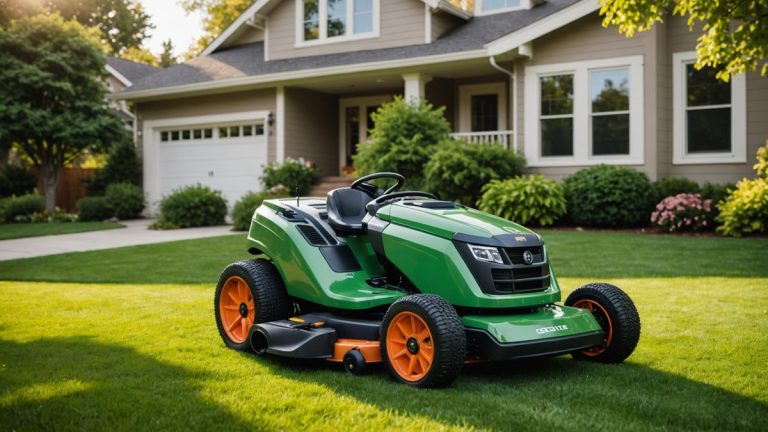
The robotic lawn mower market is charging ahead like a Husqvarna Automower on a fresh battery, with new research projecting explosive growth over the next decade. A recent market analysis forecasts the global robotic mower industry will swell to a staggering USD 3.7 billion by 2035, expanding at a compound annual growth rate (CAGR) of 11.9%. For homeowners tired of weekend mowing marathons and landscaping pros eyeing efficiency gains, this isn’t just corporate number-crunching—it’s a clear signal that autonomous lawn mowers are shifting from niche luxury to mainstream necessity.
The Numbers Behind the Robotic Mower Boom
The data paints a picture of a market on the move. Valued at approximately USD 1.2 billion in 2024, the robot lawn mower sector is set to nearly triple in size over the next 11 years. That 11.9% CAGR outpaces many traditional outdoor power equipment categories, underscoring how smart mowing technology is capturing both consumer interest and investment dollars.
Driving this growth are several converging trends: rising disposable incomes in emerging markets, the increasing adoption of smart home ecosystems, and a cultural shift toward time-saving, labor-reducing technologies. For professional landscapers, the appeal is even more pragmatic—automating routine maintenance allows crews to focus on higher-value services like design and hardscaping.
Why Robotic Mowers Are Winning Over Skeptics
Just a few years ago, autonomous lawn mowers were often dismissed as gimmicky or impractical. Today, they’re proving their worth in backyards and commercial properties alike. Here’s what’s changing minds:
- Precision and Efficiency: Modern robotic mowers use GPS, sensors, and AI-driven algorithms to navigate complex yards, avoid obstacles, and maintain consistent cutting heights—often with better precision than human operators.
- Time Savings: The average homeowner spends 40-70 hours per year mowing. A robotic mower eliminates that chore entirely, freeing up weekends for relaxation or other priorities.
- Eco-Friendly Operation: Most models are electric, producing zero emissions and operating at noise levels as low as 58 dB—quiet enough for early morning or evening mowing without disturbing neighbors.
- Cost-Effective Long-Term: While upfront costs are higher (typically $1,000–$4,000 for residential models), robotic mowers reduce ongoing expenses like fuel, maintenance, and even lawn care services over time.
- Smart Integration: Many newer models integrate with smart home systems (e.g., Alexa, Google Home) and offer app-based controls for scheduling, monitoring, and adjustments—appealing to tech-savvy users.
Brands like Husqvarna, Worx, Gardena, and EcoFlow are leading the charge, but competition is heating up. Even traditional mower manufacturers like John Deere and Cub Cadet are entering the autonomous mower space, signaling industry-wide confidence in the technology’s future.
Commercial Adoption: The Next Frontier
While residential sales currently dominate, the commercial sector is poised for rapid expansion. Landscaping businesses, golf courses, and municipal parks are increasingly piloting robotic mower fleets to cut labor costs and improve scalability. For example:
- Municipal Use: Cities in Europe and the U.S. are testing autonomous mowers for public green spaces, reducing reliance on seasonal workers and lowering maintenance budgets.
- Golf Courses: Robotic mowers like the Husqvarna Automower NERA are being deployed for rough and fairway maintenance, allowing grounds crews to focus on greens and bunkers.
- Large-Scale Landscaping: Companies managing HOAs, corporate campuses, or solar farms are adopting commercial-grade models (e.g., Mean Green Mowers’ autonomous line) to handle vast areas efficiently.
The commercial robot lawn mower market is expected to grow at an even faster CAGR than residential, driven by the need for scalable, 24/7 mowing solutions that don’t require breaks, benefits, or overtime pay.
Challenges and Considerations
Of course, no technology is without hurdles. The robotic mower market still faces a few key challenges:
- Upfront Costs: High initial prices remain a barrier for many homeowners, though financing options and long-term savings are helping to offset this.
- Installation Complexity: Most robotic mowers require boundary wire installation, which can be a DIY project or a professional service. Some newer models (e.g., EcoFlow’s Blade) are wire-free, but these are still in the early stages.
- Theft and Vandalism: As with any outdoor equipment, robotic mowers can be targets for theft. Many brands now offer GPS tracking and PIN-lock features to mitigate this risk.
- Terrain Limitations: While today’s models handle slopes up to 35-45 degrees and can navigate around obstacles, heavily wooded or uneven properties may still pose challenges.
Despite these obstacles, advancements in AI, battery technology, and sensor systems are rapidly addressing many of these limitations. For instance, some 2024 models now include computer vision to distinguish between grass and non-grass objects (e.g., toys, pet waste), reducing the risk of damage or mess.
What This Means for You
For homeowners, the message is clear: robotic mowers are no longer a futuristic fantasy—they’re a practical, increasingly accessible solution for maintaining a pristine lawn with minimal effort. If you’ve been on the fence, now is a great time to explore options, as competition among manufacturers is driving prices down and features up.
For landscaping professionals, the growth projections are a call to action. Early adoption of autonomous mowing technology could provide a competitive edge, allowing your business to offer faster, more cost-effective services. Start small with a pilot program on a few properties, then scale as you see the ROI.
And for investors and industry watchers, the robot lawn mower market represents a dynamic segment of the broader smart home and automation trend. With major players and startups alike innovating at a breakneck pace, expect to see even more game-changing developments in the coming years—perhaps even fully autonomous mowing drones or swarm robotics for large-scale applications.
FAQ: Robotic Mower Market Growth
Are robotic mowers worth the investment?
For most homeowners, yes—if you value your time and want a consistently well-maintained lawn. While the upfront cost is higher than a traditional mower, robotic models save money long-term on fuel, maintenance, and potential lawn care services. Plus, they often increase property value by keeping your yard in top shape year-round.
How do robotic mowers compare to riding mowers for large yards?
For yards up to 1-2 acres, high-end residential robotic mowers (like the Husqvarna Automower 450X or Worx Landroid M2000) can handle the job efficiently. For larger properties, commercial-grade models or a hybrid approach (robotic mowers for daily maintenance + a riding mower for heavy-duty tasks) may be ideal. Robotic mowers excel at frequent, precise cuts, which promotes healthier grass, while riding mowers are better for tackling overgrowth or rough terrain.
What’s the lifespan of a robotic mower?
With proper maintenance, a quality autonomous lawn mower typically lasts 8-10 years. Key to longevity is regular blade replacement (every 2-3 months, depending on usage), battery care (avoiding deep discharges), and keeping the unit clean and dry. Many brands offer extended warranties (up to 5 years) for added peace of mind.
Source: Original Article

Author: AI Mow
Ai Mow is the editorial team behind Ai Mower News, dedicated to bringing you the latest news, reviews, and insights on robotic lawn mowers and smart gardening technology.